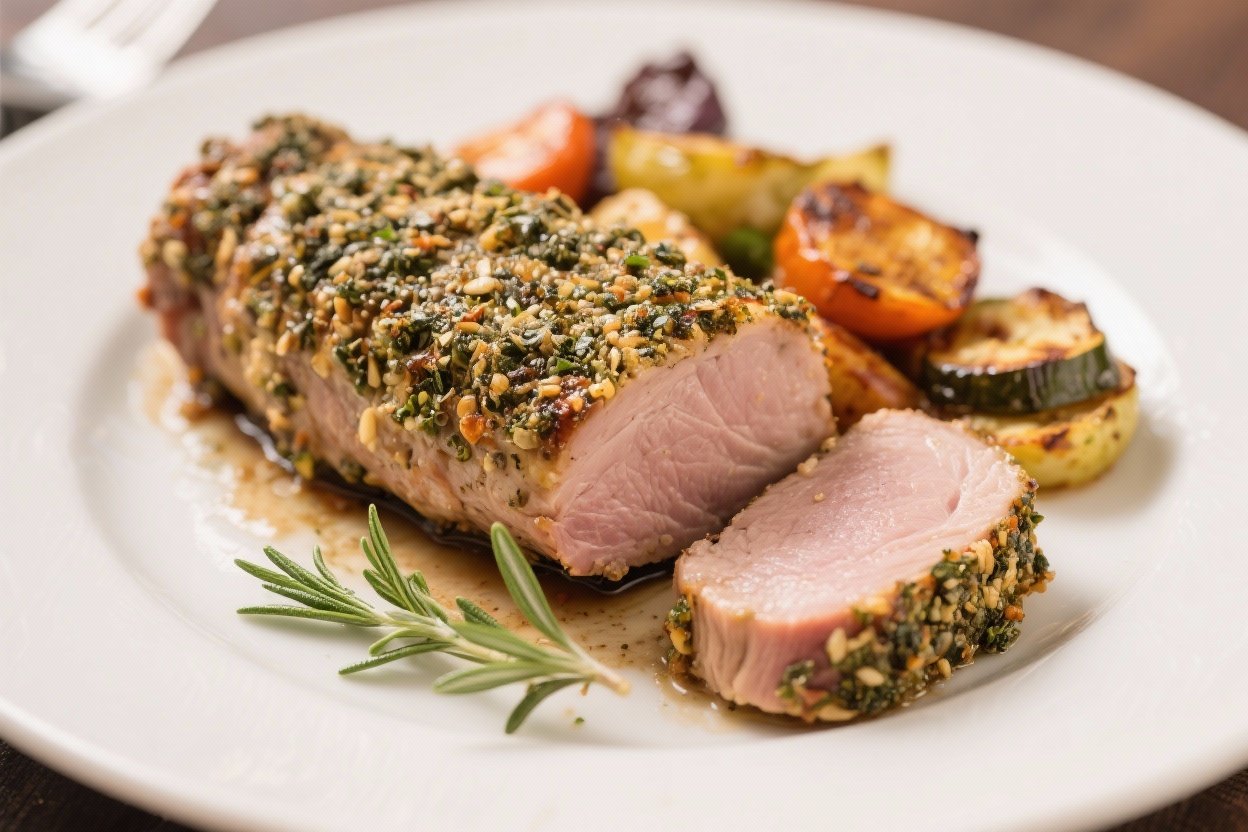
Herb-Crusted Pork Tenderloin with Roasted Veggies – A Simple, Flavor-Packed Dinner
This is the kind of weeknight dinner that tastes like a weekend feast. Herb-crusted pork tenderloin cooks quickly, stays juicy, and pairs perfectly with a sheet pan of caramelized vegetables. The flavors are bright, savory, and comforting without being heavy.
You’ll get crispy edges, tender meat, and veggies that soak up all the good pan juices. Best of all, it’s easy to pull off, even when you’re short on time.
Herb-Crusted Pork Tenderloin with Roasted Veggies - A Simple, Flavor-Packed Dinner
Ingredients
- Pork Tenderloin: 1–1.5 pounds, silver skin trimmed
- Vegetables: 1 pound baby potatoes (halved), 3 medium carrots (cut into 1-inch pieces), 1 red onion (wedges), 1 red bell pepper (strips), 1 cup Brussels sprouts (halved) or green beans
- Fresh Herbs: 1 tablespoon chopped fresh rosemary, 1 tablespoon chopped fresh thyme, 2 tablespoons chopped parsley (optional for garnish)
- Garlic: 3–4 cloves, minced
- Dijon Mustard: 2 tablespoons
- Olive Oil: 3–4 tablespoons
- Lemon: 1 (zest and juice)
- Spices: 1 teaspoon smoked paprika, 1/2 teaspoon crushed red pepper flakes (optional)
- Salt and Pepper: Kosher salt and freshly ground black pepper
Instructions
- Preheat and prep: Heat the oven to 425°F (220°C). Line a large sheet pan with parchment or foil for easy cleanup.Pat the pork tenderloin dry with paper towels.
- Mix the herb paste: In a small bowl, combine 2 tablespoons olive oil, Dijon, garlic, rosemary, thyme, lemon zest, smoked paprika, 1 teaspoon salt, and 1/2 teaspoon black pepper. Stir into a thick paste.
- Season the pork: Rub the herb paste all over the tenderloin, coating evenly. Let it sit while you prep the vegetables to absorb flavor.
- Prep the veggies: In a large bowl, toss potatoes, carrots, onion, bell pepper, and Brussels sprouts with 1–2 tablespoons olive oil, 1 teaspoon salt, and 1/2 teaspoon pepper.Add a pinch of red pepper flakes if you like heat.
- Arrange on the pan: Spread the vegetables in a single layer on the sheet pan, leaving a space in the center. Place the pork tenderloin in that space so it’s not crowded for better browning.
- Roast: Roast for 20–25 minutes, flipping the tenderloin once halfway through. The pork is done when the thickest part reaches 140–145°F on an instant-read thermometer.
- Finish with lemon: Squeeze the lemon over the veggies and pork right after you pull the pan from the oven.The acidity brightens everything.
- Rest and slice: Transfer the pork to a cutting board and rest for 5–10 minutes. Slice into 1/2-inch medallions. Toss the veggies to coat with any pan juices.
- Serve: Arrange slices of pork over the roasted vegetables.Garnish with chopped parsley and a final pinch of flaky salt if you like.
Why This Recipe Works
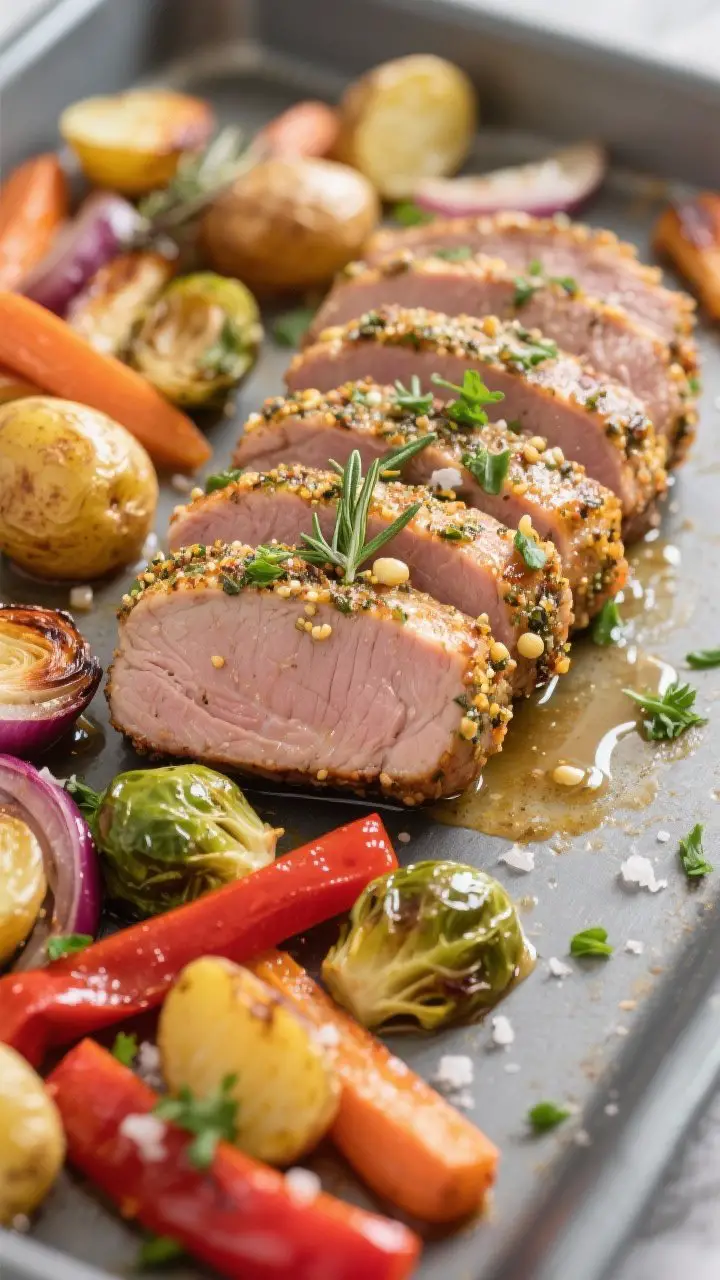
Lean, tender protein: Pork tenderloin is naturally tender and cooks fast, making it ideal for a quick but impressive meal.
Herb crust for big flavor: A mix of garlic, rosemary, thyme, and Dijon forms a fragrant crust that locks in juices and adds a savory punch.
Sheet pan simplicity: Roasting the pork and veggies together means fewer dishes and perfectly timed sides.
High-heat roasting: Cooking at 425°F promotes browning and crisp edges while keeping the inside moist.
Shopping List
- Pork Tenderloin: 1–1.5 pounds, silver skin trimmed
- Vegetables: 1 pound baby potatoes (halved), 3 medium carrots (cut into 1-inch pieces), 1 red onion (wedges), 1 red bell pepper (strips), 1 cup Brussels sprouts (halved) or green beans
- Fresh Herbs: 1 tablespoon chopped fresh rosemary, 1 tablespoon chopped fresh thyme, 2 tablespoons chopped parsley (optional for garnish)
- Garlic: 3–4 cloves, minced
- Dijon Mustard: 2 tablespoons
- Olive Oil: 3–4 tablespoons
- Lemon: 1 (zest and juice)
- Spices: 1 teaspoon smoked paprika, 1/2 teaspoon crushed red pepper flakes (optional)
- Salt and Pepper: Kosher salt and freshly ground black pepper
Step-by-Step Instructions
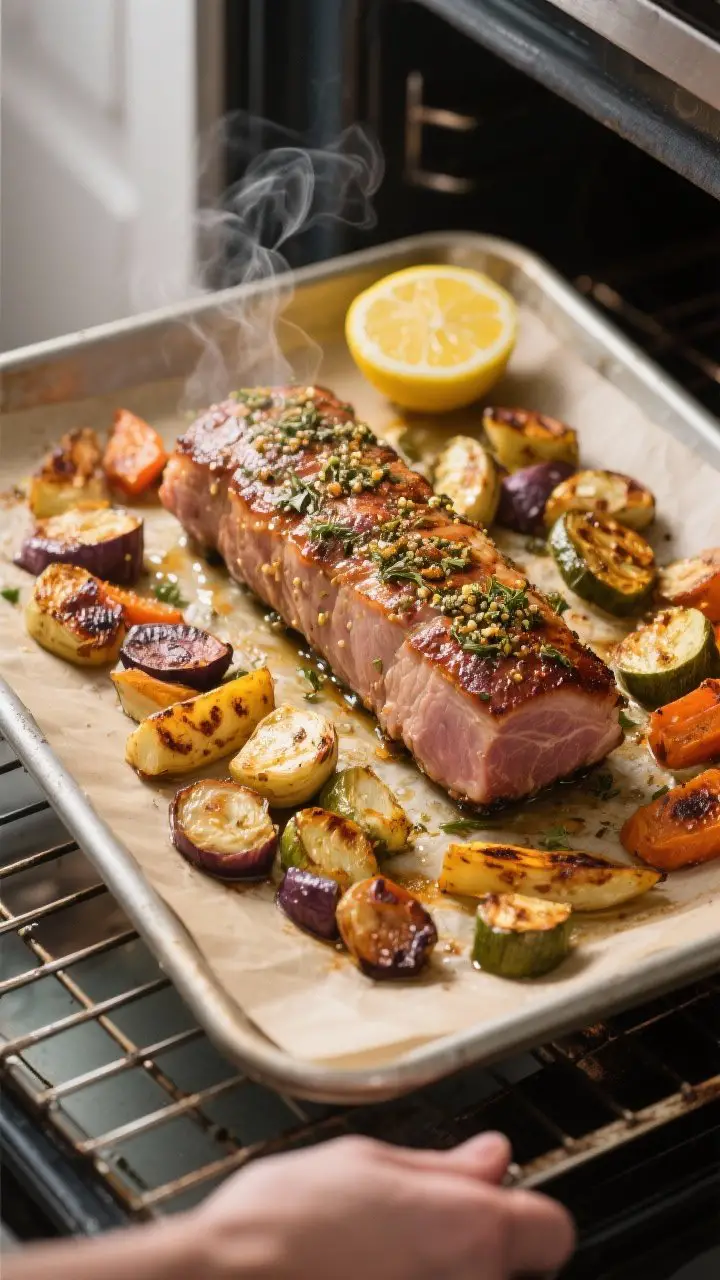
- Preheat and prep: Heat the oven to 425°F (220°C). Line a large sheet pan with parchment or foil for easy cleanup.
Pat the pork tenderloin dry with paper towels.
- Mix the herb paste: In a small bowl, combine 2 tablespoons olive oil, Dijon, garlic, rosemary, thyme, lemon zest, smoked paprika, 1 teaspoon salt, and 1/2 teaspoon black pepper. Stir into a thick paste.
- Season the pork: Rub the herb paste all over the tenderloin, coating evenly. Let it sit while you prep the vegetables to absorb flavor.
- Prep the veggies: In a large bowl, toss potatoes, carrots, onion, bell pepper, and Brussels sprouts with 1–2 tablespoons olive oil, 1 teaspoon salt, and 1/2 teaspoon pepper.
Add a pinch of red pepper flakes if you like heat.
- Arrange on the pan: Spread the vegetables in a single layer on the sheet pan, leaving a space in the center. Place the pork tenderloin in that space so it’s not crowded for better browning.
- Roast: Roast for 20–25 minutes, flipping the tenderloin once halfway through. The pork is done when the thickest part reaches 140–145°F on an instant-read thermometer.
- Finish with lemon: Squeeze the lemon over the veggies and pork right after you pull the pan from the oven.
The acidity brightens everything.
- Rest and slice: Transfer the pork to a cutting board and rest for 5–10 minutes. Slice into 1/2-inch medallions. Toss the veggies to coat with any pan juices.
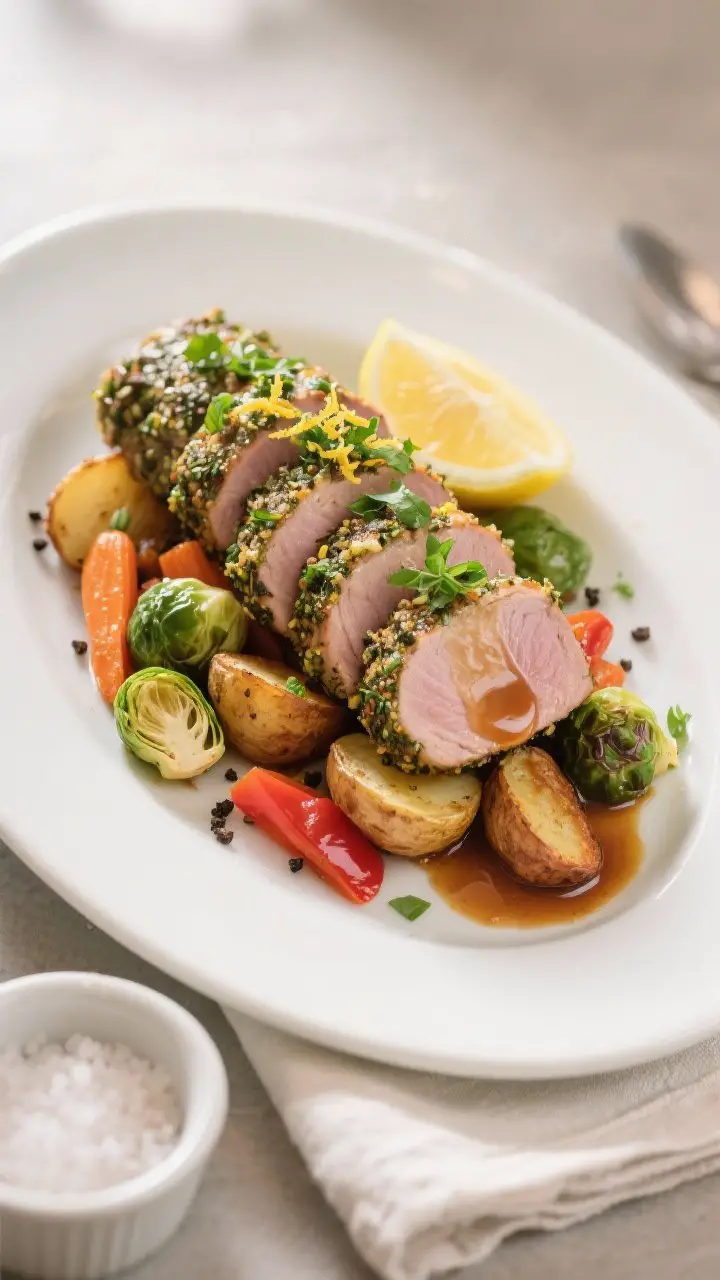
- Serve: Arrange slices of pork over the roasted vegetables.
Garnish with chopped parsley and a final pinch of flaky salt if you like.
How to Store
Refrigerate: Store leftovers in an airtight container for up to 3–4 days. Keep the pork and veggies together so the flavors mingle.
Freeze: Pork tenderloin slices freeze well for up to 2 months. Wrap tightly and thaw overnight in the fridge.
Veggies can be frozen, but they may soften slightly when reheated.
Reheat: Warm in a 300°F oven, covered, for 10–12 minutes, or microwave gently at 50% power to avoid drying out. Add a splash of broth or a squeeze of lemon to refresh.
Health Benefits
Lean protein: Pork tenderloin is one of the leanest cuts, delivering high-quality protein with relatively low fat.
Fiber-rich vegetables: Potatoes, carrots, and Brussels sprouts provide fiber, which supports digestion and steady energy.
Heart-friendly fats: Olive oil and herbs add flavor without heavy sauces, keeping the dish light but satisfying.
Micronutrient boost: You’ll get vitamins A, C, and K, plus minerals like potassium and iron, all from a single pan.
Common Mistakes to Avoid
- Skipping the pat-dry step: Wet pork won’t brown well. Always dry it before adding the herb paste.
- Overcooking: Pork dries out fast past 145°F.
Use a thermometer and let carryover heat finish the job while it rests.
- Crowding the pan: Overlapping vegetables steam instead of roast. Use a large sheet pan and keep a little space between pieces.
- Uneven vegetable sizes: Cut veggies to similar sizes so they cook at the same rate.
- Skipping the rest: Resting the pork locks in juices. Slice too soon and they’ll run out onto the board.
Recipe Variations
- Maple-Dijon Twist: Add 1 tablespoon maple syrup to the herb paste for a subtle sweetness that caramelizes in the oven.
- Mediterranean Style: Swap rosemary/thyme for oregano and basil.
Add cherry tomatoes and olives to the pan during the last 10 minutes.
- Smoky Chipotle: Replace Dijon with 1 tablespoon chipotle in adobo. Toss veggies with cumin and coriander for warmth.
- Mustard-Crusted with Panko: Press 1/3 cup panko onto the mustard-herb coating for extra crunch. Roast as directed.
- Fall Harvest: Use sweet potato, parsnips, and red onion.
Finish with a drizzle of balsamic glaze.
- Sheet Pan Apple Upgrade: Add sliced tart apples during the last 10 minutes for a savory-sweet contrast.
FAQ
How do I know my pork tenderloin is done without overcooking?
Use an instant-read thermometer and pull the pork at 140–145°F. It should have a slight blush in the center. Rest for 5–10 minutes before slicing so it finishes cooking gently.
Can I make this ahead?
Yes.
Combine the herb paste and coat the pork up to 12 hours ahead, then refrigerate. Cut the veggies and store separately. When ready, assemble on the pan and roast.
What if I don’t have fresh herbs?
Use dried herbs, but reduce the amount.
For each tablespoon of fresh herbs, use about 1 teaspoon dried. The flavor will be slightly more concentrated, so taste and adjust salt.
Can I use pork loin instead of tenderloin?
You can, but the cooking time will be longer. A pork loin is thicker and may take 40–60 minutes at 425°F depending on size.
Keep an eye on the internal temperature and tent with foil if browning too fast.
What veggies roast best with pork?
Sturdy vegetables like potatoes, carrots, Brussels sprouts, onions, and peppers roast well at high heat. Avoid very watery vegetables like zucchini unless you add them in the last 10–12 minutes.
How can I keep the crust from burning?
Make sure there’s enough olive oil in the paste and don’t place the tenderloin too close to the heating element. If the crust gets dark before the pork is done, tent loosely with foil.
Do I need to sear the pork first?
No sear is required here.
The high oven temperature and the herb-Dijon coating create a flavorful crust without pre-searing. If you want extra browning, you can sear for 1–2 minutes per side before roasting.
Wrapping Up
Herb-crusted pork tenderloin with roasted veggies is a simple, satisfying dinner that earns a spot in your weekly rotation. It’s quick to prepare, uses everyday ingredients, and turns out consistently juicy.
With a few smart steps and a hot oven, you’ll get big flavor with minimal effort. Keep a thermometer handy, don’t crowd the pan, and enjoy the kind of meal that makes weeknights feel special.