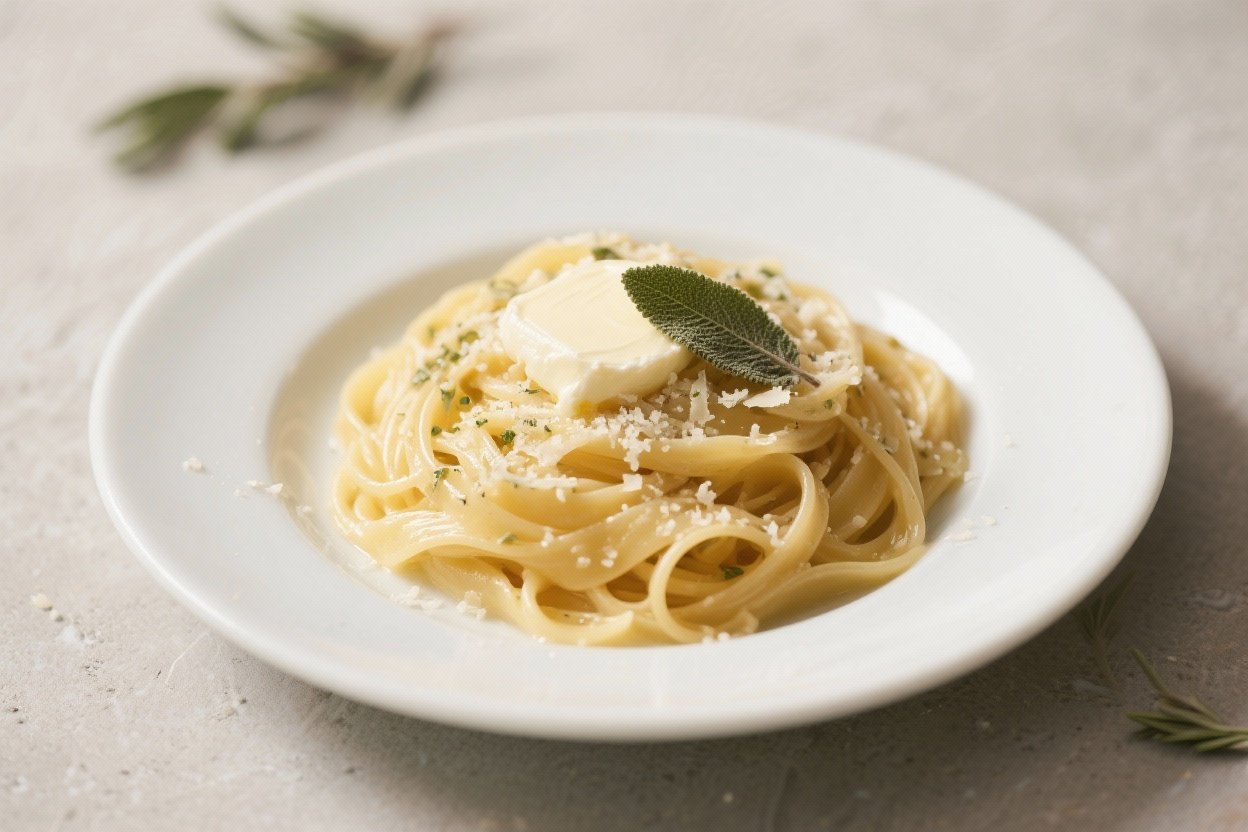
Boil the pasta water. Fill a large pot with water and bring it to a rolling boil.
Salt generously—your water should taste pleasantly salty. This is your first layer of flavor.
Prep the sage and cheese. While the water heats, grate the Parmesan finely and set it aside. Rinse and pat dry the sage.
If your leaves are large, slice them into thin ribbons.
Cook the pasta. Add the pasta and cook until just shy of al dente. Check the package for timing, then taste a minute early. You want a firm bite because it will finish in the pan.
Reserve pasta water. Before draining, dip a heatproof cup into the pot and save about 1 1/2 cups of starchy water.
This is the secret to a silky sauce.
Sizzle the sage in butter. In a large skillet, melt the butter over medium heat. Add the sage and cook 1–2 minutes until fragrant. You want the butter foamy and the sage glossy, not burnt.
Build the sauce base. Add a generous splash of reserved pasta water to the skillet and swirl.
The butter will emulsify slightly. Keep the heat at medium-low to avoid breaking the sauce.
Add the pasta. Transfer the drained pasta directly to the skillet. Toss to coat, adding more pasta water as needed.
The sauce should cling lightly and look glossy.
Incorporate the Parmesan off heat. Take the pan off the heat. Sprinkle in the Parmesan in small handfuls, tossing constantly. Add a bit more pasta water if it looks tight.
The goal is a smooth, creamy coating without clumps.
Season and finish. Taste and add salt if needed, then grind in black pepper. If you like, add a squeeze of lemon for brightness or a pinch of red pepper flakes for heat. A drizzle of olive oil can add a fruity finish.
Serve immediately. Plate while it’s hot and saucy.
Garnish with a few extra sage leaves and a light dusting of Parmesan.