

Miso Ginger Soup With Tofu and Greens – Comforting, Light, and Flavor-Packed
This is the kind of soup that feels like a warm hug without weighing you down. Miso ginger soup is bright, savory, and full of gentle heat, with silky tofu and tender greens that make it satisfying yet light. It’s quick enough for a weeknight but feels special, like something you’d order at a cozy noodle bar.
If you’re craving clean flavors, simple prep, and real nourishment, this bowl checks every box.

Miso Ginger Soup With Tofu and Greens – Comforting, Light, and Flavor-Packed
Ingredients
- 6 cups low-sodium vegetable broth or water
- 3–4 tablespoons white or yellow miso paste (adjust to taste)
- 1 tablespoon freshly grated ginger (up to 2 tablespoons for a stronger kick)
- 2 cloves garlic, thinly sliced or minced
- 2 teaspoons toasted sesame oil
- 1–2 tablespoons soy sauce or tamari (start with 1 tablespoon)
- 8 ounces firm or extra-firm tofu, drained and cut into 1/2-inch cubes
- 4 cups chopped greens (baby spinach, baby bok choy, kale, or Swiss chard)
- 3 green onions, thinly sliced (white and green parts separated)
- 1 small carrot, cut into matchsticks (optional)
- 1 cup sliced mushrooms (shiitake, cremini, or button)
- 1 teaspoon rice vinegar or a squeeze of lemon (optional, for brightness)
- Red pepper flakes or a drizzle of chili oil (optional, for heat)
- Sesame seeds, for garnish (optional)
Instructions
- Warm the aromatics: In a medium pot over medium heat, add the sesame oil.Stir in the ginger, garlic, and the white parts of the green onions. Cook for 1–2 minutes until fragrant but not browned.
- Add mushrooms and carrot: Toss in the mushrooms and carrot, if using. Sauté 2–3 minutes until the mushrooms soften slightly.
- Pour in the broth: Add the vegetable broth and bring to a gentle simmer.Reduce heat to low. Keep it below a rolling boil to protect the miso’s flavor and benefits later.
- Season the base: Stir in soy sauce or tamari. Taste the broth so you can adjust saltiness with miso more accurately later.
- Temper the miso: In a small bowl, whisk the miso paste with a ladle of hot broth until smooth.This prevents clumps and keeps the miso from overheating.
- Add tofu and miso: Slide the tofu into the pot and gently stir. Turn off the heat, then whisk in the tempered miso. Keeping the heat low preserves miso’s delicate flavor.
- Add greens: Stir in your greens and the green onion tops.Spinach wilts in 30–60 seconds; tougher greens like kale may need 2–3 minutes. Don’t overcook—aim for bright and tender.
- Finish and adjust: Add rice vinegar or a squeeze of lemon if you want brightness. Taste and adjust: more miso for depth, soy for salt, or a splash of water if it’s too strong.
- Serve: Ladle into bowls.Garnish with sesame seeds and a pinch of red pepper flakes or a drizzle of chili oil for heat, if you like.
What Makes This Recipe So Good
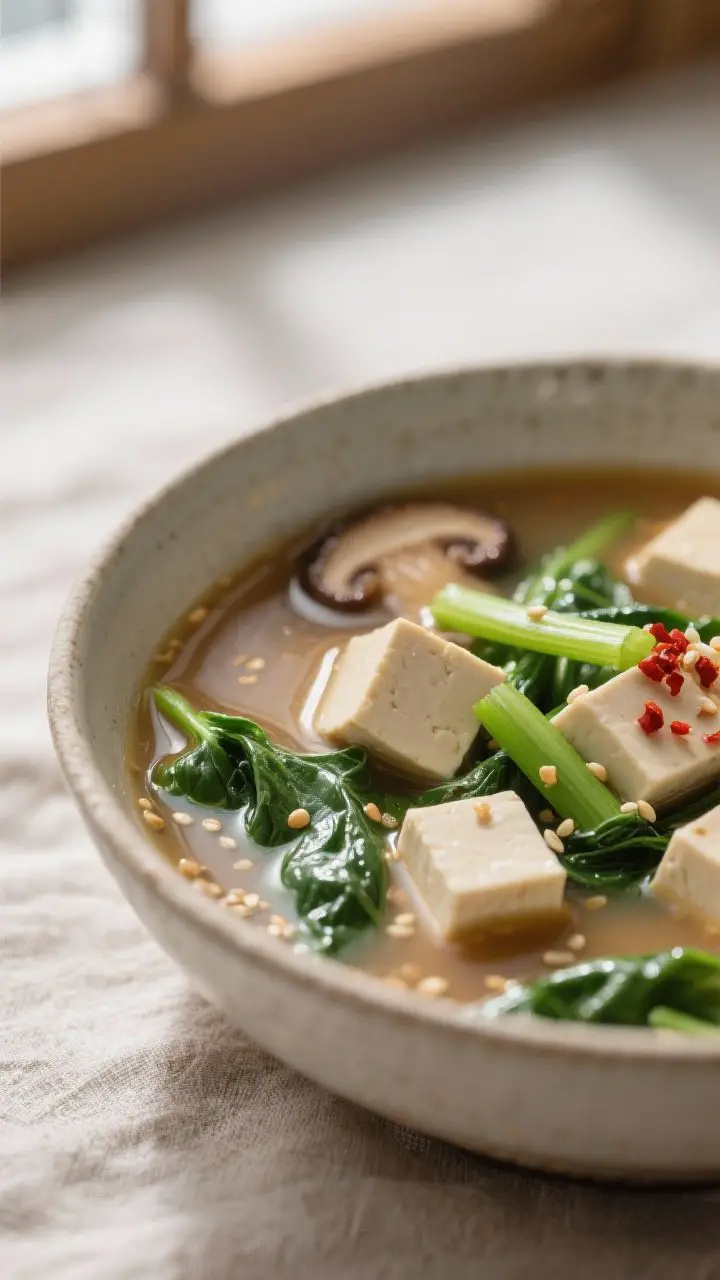
- Balanced flavor: Salty, savory miso pairs beautifully with fresh ginger and a splash of soy or tamari. It’s warming but not heavy.
- Quick and easy: You’re looking at about 25 minutes start to finish, with minimal chopping and one pot.
- Flexible: Use spinach, kale, bok choy, or whatever greens you’ve got. Tofu soaks up the broth and keeps things protein-packed.
- Comforting and light: It’s soothing when you’re under the weather yet satisfying enough for a simple dinner.
- Great for meal prep: The broth keeps well, and you can add the greens fresh when reheating to keep them bright.
Ingredients
- 6 cups low-sodium vegetable broth or water
- 3–4 tablespoons white or yellow miso paste (adjust to taste)
- 1 tablespoon freshly grated ginger (up to 2 tablespoons for a stronger kick)
- 2 cloves garlic, thinly sliced or minced
- 2 teaspoons toasted sesame oil
- 1–2 tablespoons soy sauce or tamari (start with 1 tablespoon)
- 8 ounces firm or extra-firm tofu, drained and cut into 1/2-inch cubes
- 4 cups chopped greens (baby spinach, baby bok choy, kale, or Swiss chard)
- 3 green onions, thinly sliced (white and green parts separated)
- 1 small carrot, cut into matchsticks (optional)
- 1 cup sliced mushrooms (shiitake, cremini, or button)
- 1 teaspoon rice vinegar or a squeeze of lemon (optional, for brightness)
- Red pepper flakes or a drizzle of chili oil (optional, for heat)
- Sesame seeds, for garnish (optional)
How to Make It
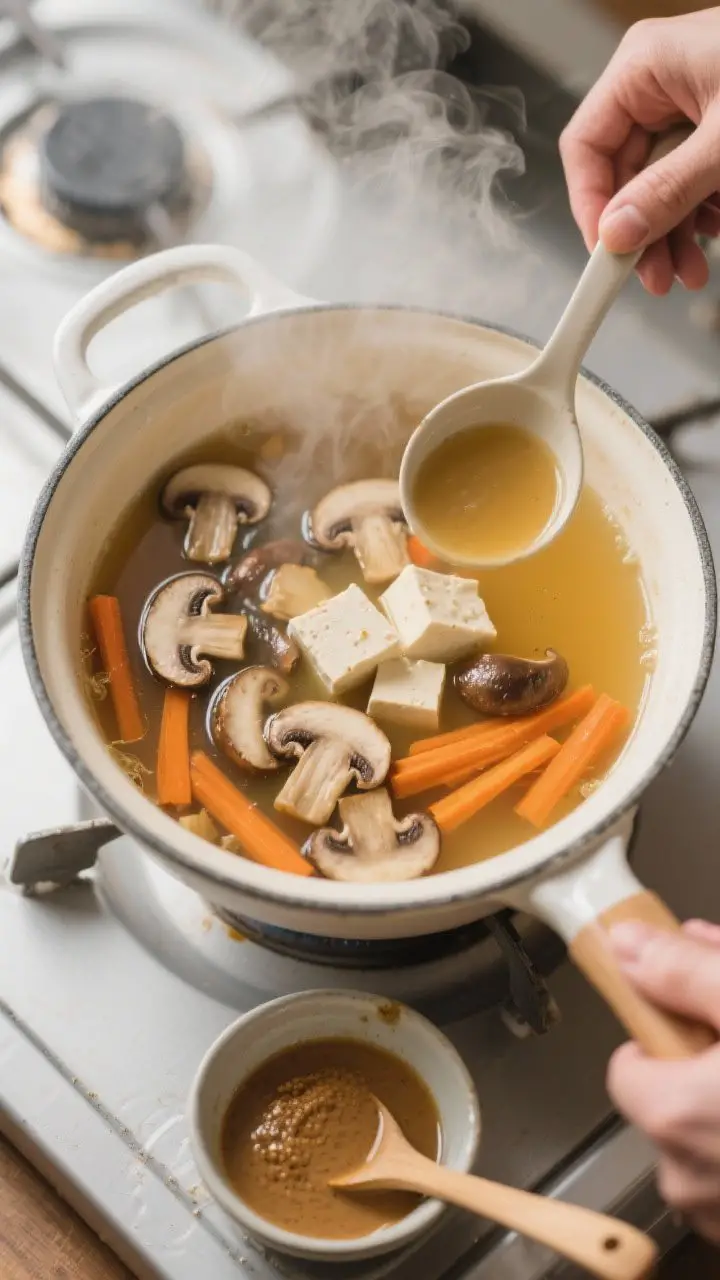
- Warm the aromatics: In a medium pot over medium heat, add the sesame oil.
Stir in the ginger, garlic, and the white parts of the green onions. Cook for 1–2 minutes until fragrant but not browned.
- Add mushrooms and carrot: Toss in the mushrooms and carrot, if using. Sauté 2–3 minutes until the mushrooms soften slightly.
- Pour in the broth: Add the vegetable broth and bring to a gentle simmer.
Reduce heat to low. Keep it below a rolling boil to protect the miso’s flavor and benefits later.
- Season the base: Stir in soy sauce or tamari. Taste the broth so you can adjust saltiness with miso more accurately later.
- Temper the miso: In a small bowl, whisk the miso paste with a ladle of hot broth until smooth.
This prevents clumps and keeps the miso from overheating.
- Add tofu and miso: Slide the tofu into the pot and gently stir. Turn off the heat, then whisk in the tempered miso. Keeping the heat low preserves miso’s delicate flavor.
- Add greens: Stir in your greens and the green onion tops.
Spinach wilts in 30–60 seconds; tougher greens like kale may need 2–3 minutes. Don’t overcook—aim for bright and tender.
- Finish and adjust: Add rice vinegar or a squeeze of lemon if you want brightness. Taste and adjust: more miso for depth, soy for salt, or a splash of water if it’s too strong.
- Serve: Ladle into bowls.
Garnish with sesame seeds and a pinch of red pepper flakes or a drizzle of chili oil for heat, if you like.
Storage Instructions
- Refrigerator: Store the soup in an airtight container for up to 4 days. If possible, keep the greens separate and add when reheating to maintain color and texture.
- Freezer: The broth freezes well for up to 2 months. Freeze without tofu and greens for best texture; add them fresh when reheating.
- Reheating: Warm gently on the stove over low heat until steaming.
Avoid boiling to prevent the miso from turning harsh and the tofu from breaking apart.
Why This is Good for You
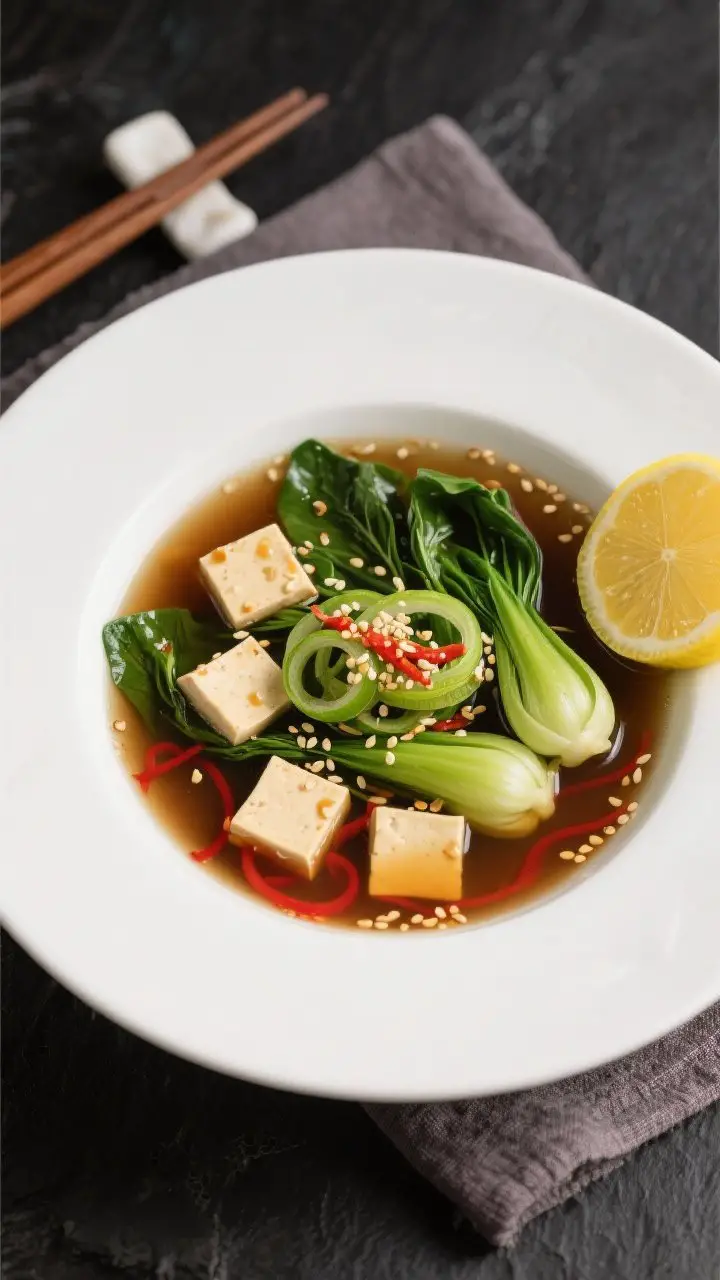
- Miso provides savory depth and may contain live cultures that support gut health when not overheated.
- Ginger offers a natural warming effect and is known for its soothing qualities, especially for digestion.
- Tofu brings plant-based protein and minerals while keeping the soup light.
- Greens add fiber, vitamins A and K, and a fresh bite to balance the savory broth.
- Low in heaviness, big on comfort: You get steady energy without the crash of a richer, cream-based soup.
Pitfalls to Watch Out For
- Boiling miso: High heat can dull the flavor and reduce beneficial cultures. Add miso off the heat.
- Over-salting: Miso and soy sauce both bring salt. Taste the broth before adding extra.
- Soggy greens: Add greens at the end.
Cook just until wilted for bright color and a tender bite.
- Crumbly tofu: Use firm or extra-firm tofu and stir gently. Pat dry before cubing for clean edges.
- Flat flavor: A small splash of rice vinegar or lemon at the end lifts the whole bowl. Don’t skip that final taste check.
Recipe Variations
- Noodle boost: Add cooked soba, udon, or rice noodles to make it a full meal.
Place noodles in the bowl and ladle soup over.
- Spicy version: Simmer a few slices of fresh chili with the aromatics or finish with chili crisp or chili oil.
- Mushroom-forward: Use a mix of shiitake, oyster, and enoki for a deeper umami profile.
- Greens swap: Try napa cabbage, baby kale, or tatsoi. Hardier greens may need an extra minute or two.
- Protein options: Swap tofu for tempeh, or add edamame for a different texture. If you eat seafood, a few shrimp can be poached in the broth.
- Citrus twist: Finish with yuzu juice or a strip of lemon zest for a fragrant lift.
- Broth base: Use dashi for a classic Japanese note.
A kombu-and-mushroom broth is great for a vegan dashi-style base.
FAQ
What kind of miso should I use?
White (shiro) miso is mild and slightly sweet, ideal for this soup. Yellow miso works too and gives a deeper savory note. Red miso is stronger and saltier; use less and taste as you go.
Can I make this gluten-free?
Yes.
Use tamari instead of soy sauce and check that your miso is labeled gluten-free. Many miso pastes are, but always read the label.
Do I have to press the tofu?
Pressing isn’t required, but patting the tofu dry improves texture and helps it hold its shape. If your tofu is very wet, a quick 10–15 minute press with paper towels is helpful.
How do I keep miso from clumping?
Temper it.
Whisk the miso with a ladle of hot broth in a small bowl until smooth, then stir it back into the pot off the heat.
Can I use frozen greens?
Absolutely. Add them straight from the freezer and simmer just until heated through. They’ll be softer than fresh but still tasty.
What if I don’t have sesame oil?
Use a neutral oil for sautéing and finish with a few drops of sesame oil if you have it.
If not, the soup will still be delicious—ginger and miso carry the flavor.
How can I make it heartier without noodles?
Add cubed sweet potato or daikon and simmer until tender, or stir in a handful of cooked quinoa or brown rice before serving.
Why does my soup taste too salty?
Different miso brands vary in saltiness. Balance it by adding more water or unsalted broth, a few slices of potato (then remove), or a splash of rice vinegar to brighten and distract from saltiness.
Final Thoughts
Miso ginger soup with tofu and greens is proof that simple ingredients can add up to something special. It’s quick, warming, and flexible enough to meet you where your fridge is.
Keep miso on hand, grab a knob of ginger, and you’ve got the start of a nourishing bowl any night of the week. Once you make it a couple of times, it becomes second nature—and a go-to comfort you can feel good about.