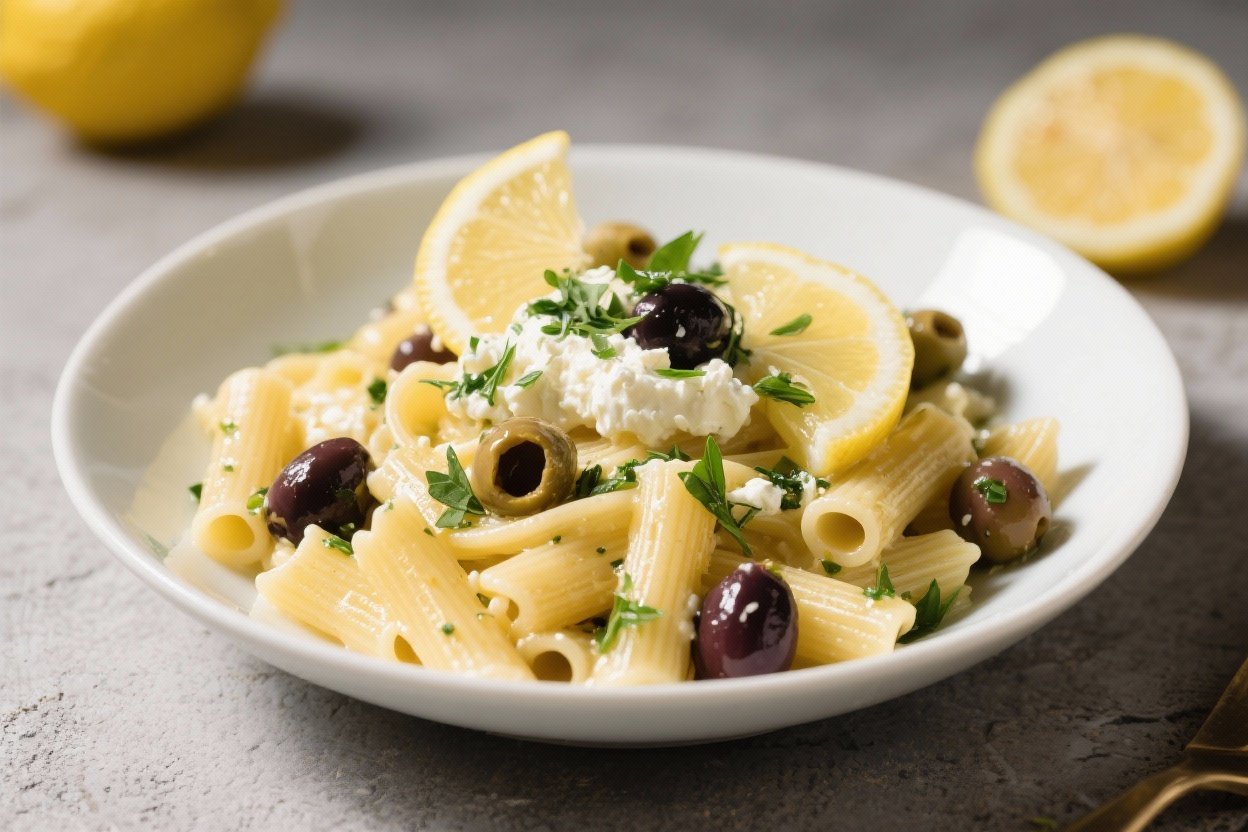
Lemon Ricotta Pasta With Olives & Fresh Herbs – Bright, Creamy, and Weeknight-Friendly
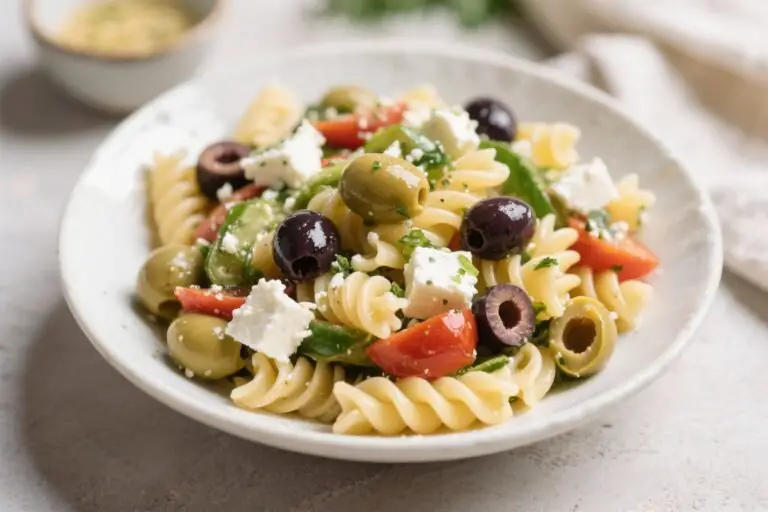
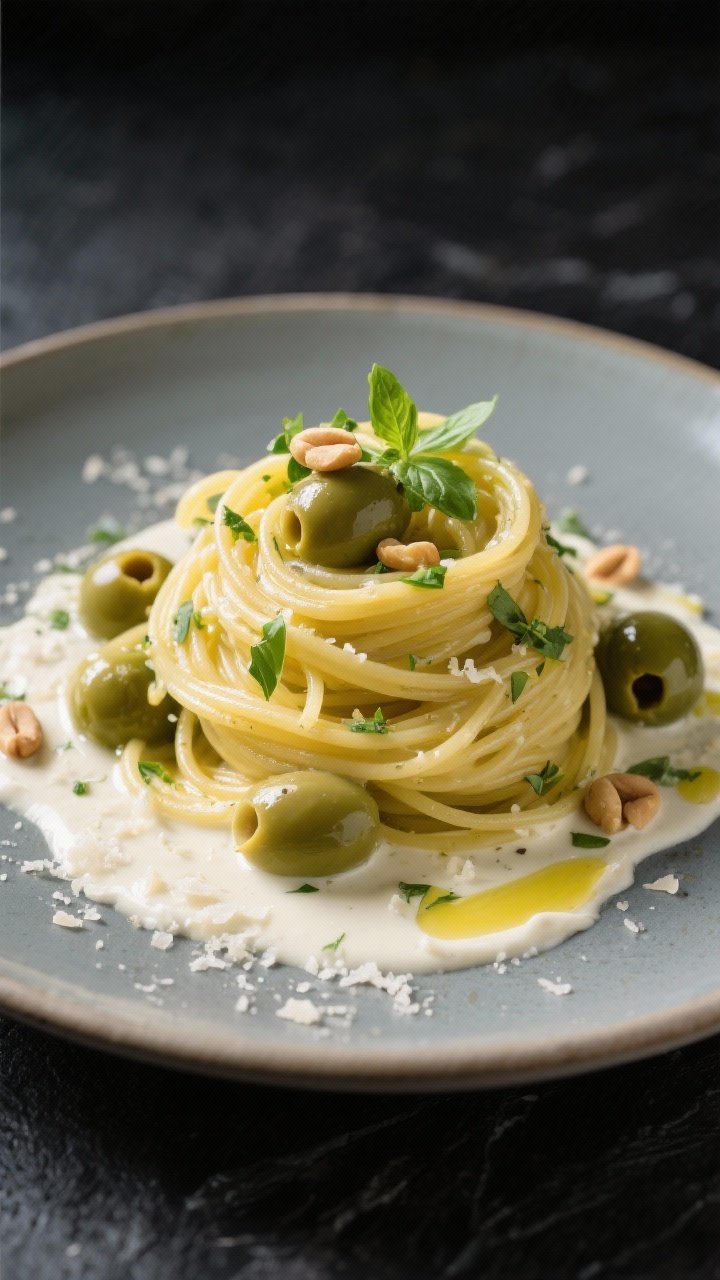
This pasta brings together a few everyday ingredients and turns them into something bright and satisfying. You get a creamy lemon-ricotta sauce that clings to warm noodles, salty pops of olives, and a shower of fresh herbs to finish. It’s fast enough for a Tuesday night but feels special enough for company.
If you enjoy clean, zesty flavors without heavy cream, this one’s for you. The best part? It all comes together while the pasta boils.

Lemon Ricotta Pasta With Olives & Fresh Herbs – Bright, Creamy, and Weeknight-Friendly
Ingredients
- Pasta: 12 oz spaghetti, linguine, or short pasta like orecchiette
- Ricotta cheese: 1 cup whole-milk ricotta (look for a creamy brand)
- Lemon: 1 large, for zest and juice
- Olives: 1/2 cup pitted olives, roughly chopped (Kalamata or Castelvetrano work well)
- Fresh herbs: 1/2 cup mixed chopped parsley and basil (or dill and mint)
- Extra-virgin olive oil: 2–3 tablespoons
- Garlic: 1–2 small cloves, finely grated or minced
- Parmesan or Pecorino Romano: 1/3 cup finely grated, plus more for serving
- Red pepper flakes: A pinch, optional
- Salt and black pepper: To taste
Instructions
- Boil the pasta. Bring a large pot of salted water to a boil. Cook the pasta until just shy of al dente. Before draining, reserve about 1 cup of the starchy cooking water.
- Make the ricotta base. In a large bowl, whisk together ricotta, lemon zest, 1–2 tablespoons lemon juice, olive oil, garlic, and a pinch of red pepper flakes.Add the grated Parmesan and whisk until smooth. Season with salt and black pepper.
- Loosen the sauce. Whisk in 1/4 cup hot pasta water to loosen the ricotta mixture. It should look creamy and pourable, not stiff.Add more water a little at a time as needed.
- Fold in the olives and herbs. Stir in the chopped olives and half of the herbs. This layers flavor right into the sauce so it’s not just sitting on top.
- Toss with hot pasta. Add the drained pasta to the bowl while it’s still very hot. Toss vigorously to coat, adding more pasta water as needed until the sauce clings and looks glossy.
- Taste and adjust. Add more lemon juice for brightness, more salt if needed, and extra pepper.If it seems too thick, loosen with another splash of pasta water and a drizzle of olive oil.
- Finish and serve. Top with the remaining herbs, extra Parmesan, and a twist of black pepper. Serve immediately while warm and creamy.
Why This Recipe Works
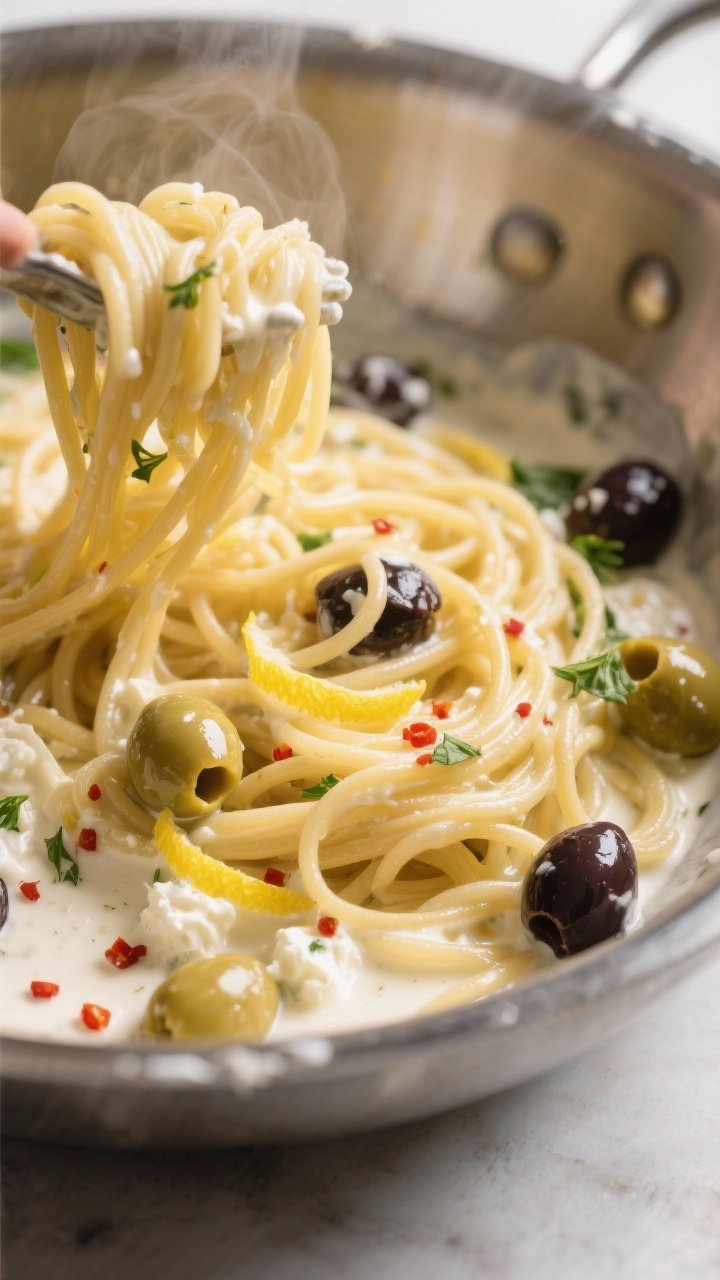
The secret is using ricotta as a no-cook sauce base.
When you whisk ricotta with lemon juice, zest, olive oil, and starchy pasta water, it turns silky and coats the pasta without getting heavy. Olives add a savory bite that balances the citrus, and herbs bring freshness and aroma. Because the sauce isn’t simmered, the lemon stays bright and the ricotta stays light.
It’s a smart, simple technique that feels restaurant-worthy with almost no effort.
Shopping List
- Pasta: 12 oz spaghetti, linguine, or short pasta like orecchiette
- Ricotta cheese: 1 cup whole-milk ricotta (look for a creamy brand)
- Lemon: 1 large, for zest and juice
- Olives: 1/2 cup pitted olives, roughly chopped (Kalamata or Castelvetrano work well)
- Fresh herbs: 1/2 cup mixed chopped parsley and basil (or dill and mint)
- Extra-virgin olive oil: 2–3 tablespoons
- Garlic: 1–2 small cloves, finely grated or minced
- Parmesan or Pecorino Romano: 1/3 cup finely grated, plus more for serving
- Red pepper flakes: A pinch, optional
- Salt and black pepper: To taste
Step-by-Step Instructions
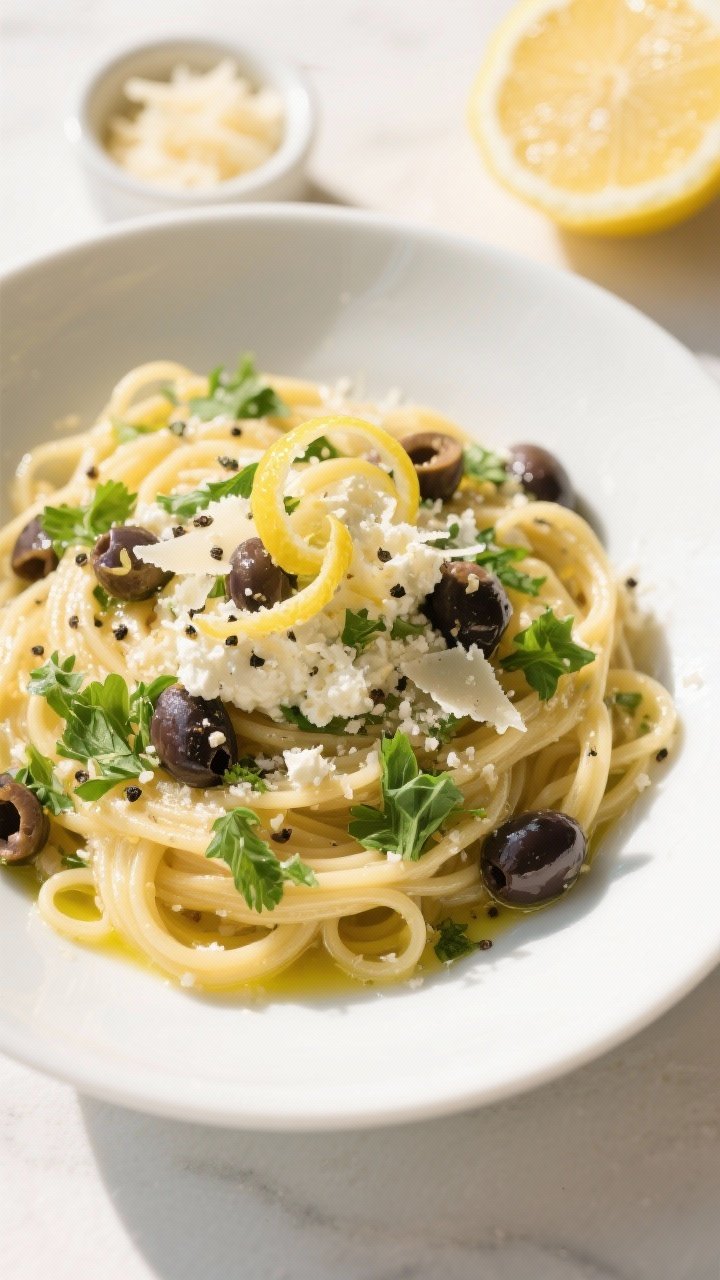
- Boil the pasta. Bring a large pot of salted water to a boil. Cook the pasta until just shy of al dente. Before draining, reserve about 1 cup of the starchy cooking water.
- Make the ricotta base. In a large bowl, whisk together ricotta, lemon zest, 1–2 tablespoons lemon juice, olive oil, garlic, and a pinch of red pepper flakes.
Add the grated Parmesan and whisk until smooth. Season with salt and black pepper.
- Loosen the sauce. Whisk in 1/4 cup hot pasta water to loosen the ricotta mixture. It should look creamy and pourable, not stiff.
Add more water a little at a time as needed.
- Fold in the olives and herbs. Stir in the chopped olives and half of the herbs. This layers flavor right into the sauce so it’s not just sitting on top.
- Toss with hot pasta. Add the drained pasta to the bowl while it’s still very hot. Toss vigorously to coat, adding more pasta water as needed until the sauce clings and looks glossy.
- Taste and adjust. Add more lemon juice for brightness, more salt if needed, and extra pepper.
If it seems too thick, loosen with another splash of pasta water and a drizzle of olive oil.
- Finish and serve. Top with the remaining herbs, extra Parmesan, and a twist of black pepper. Serve immediately while warm and creamy.
Storage Instructions
This pasta is best eaten right away because the sauce is delicate. If you have leftovers, store them in an airtight container in the fridge for up to 2 days.
To reheat, add a splash of water and a little olive oil to a skillet over low heat, then warm gently, stirring until creamy again. Avoid microwaving on high, which can make the ricotta grainy. If it tightens up, a squeeze of lemon and a bit more water helps bring it back.
Why This is Good for You
- Protein and calcium: Ricotta adds protein and calcium without the heaviness of cream-based sauces.
- Healthy fats: Extra-virgin olive oil and olives provide heart-healthy monounsaturated fats.
- Fresh herbs: Herbs offer antioxidants and extra flavor, reducing the need for heavy amounts of salt.
- Lemon: Brightens the dish without extra calories and helps wake up your palate.
Pitfalls to Watch Out For
- Ricotta texture: If your ricotta is very thick or grainy, the sauce may clump.
Whisk well with pasta water and olive oil until smooth before adding pasta.
- Too much lemon juice: It can curdle the ricotta if you use a lot without balancing with oil and pasta water. Start small, taste, and adjust.
- Skipping the pasta water: This starch is crucial for a silky sauce. Always reserve at least 1 cup.
- Overcooked pasta: The sauce is gentle; mushy pasta won’t hold up.
Cook to just shy of al dente.
- Cold ingredients: Use room-temperature ricotta for easier emulsifying. If it’s cold, the sauce may feel tight.
Variations You Can Try
- Green boost: Fold in baby spinach, arugula, or blanched peas right before serving.
- Creamier finish: Add a spoonful of mascarpone or a splash of cream to the ricotta mixture.
- Briny twist: Add capers with the olives for extra punch.
- Protein add-ins: Top with flaky canned tuna, grilled shrimp, or shredded rotisserie chicken.
- Nutty crunch: Toasted pine nuts or almonds add texture and richness.
- Herb swap: Try dill and mint for a Mediterranean vibe, or chives and tarragon for a softer profile.
- Gluten-free: Use a quality gluten-free pasta and watch the cook time closely.
- Citrus play: Mix in a little orange zest with the lemon for a rounder citrus flavor.
FAQ
Can I use low-fat ricotta?
Yes, but whole-milk ricotta gives a smoother, richer sauce. If using low-fat, add a touch more olive oil and pasta water to help it emulsify and feel creamy.
What pasta shape works best?
Spaghetti, linguine, or bucatini are great, but short shapes like orecchiette and shells are also excellent because they scoop up the sauce and olives.
Do I need to cook the sauce?
No.
This is a no-cook sauce that relies on hot pasta and starchy water to warm and loosen the ricotta. Heating the sauce on the stove can make it grainy.
Which olives should I use?
Kalamata adds a savory punch; Castelvetrano is buttery and mild. Use what you like, but make sure they’re pitted and roughly chopped for even distribution.
How do I prevent the sauce from being bland?
Season at every step.
Salt the pasta water well, use fresh lemon zest, and don’t skimp on herbs and Parmesan. A final drizzle of good olive oil also lifts the flavor.
Can I make it ahead?
You can mix the ricotta base (without herbs) up to a day in advance. Bring it to room temperature, loosen with warm pasta water, then fold in herbs and olives right before serving.
Is there a dairy-free option?
Try a high-quality almond- or cashew-based ricotta.
Add extra olive oil for richness, and be gentle with lemon juice to avoid breaking the texture.
What if my sauce is too thick?
Add more hot pasta water a tablespoon at a time and toss vigorously. A small squeeze of lemon and a drizzle of olive oil can also help it turn glossy.
Can I add vegetables?
Absolutely. Asparagus tips, sautéed zucchini, cherry tomatoes, or steamed broccoli florets all work.
Keep the pieces small so they mingle with the pasta and sauce.
How do I make it spicier?
Increase the red pepper flakes, or add a spoonful of Calabrian chili paste to the ricotta mixture. Adjust to your heat tolerance.
In Conclusion
Lemon Ricotta Pasta with Olives & Fresh Herbs is proof that simple ingredients can deliver big flavor. With a bright, creamy sauce, briny olives, and fresh herbs, it’s both easy and elegant.
Keep this method in your back pocket for a quick dinner, and tweak the add-ins based on what you have. Once you master the ricotta-and-pasta-water trick, you’ll use it again and again. Serve it hot, finish with extra herbs, and enjoy the fresh, sunny flavors in every bite.