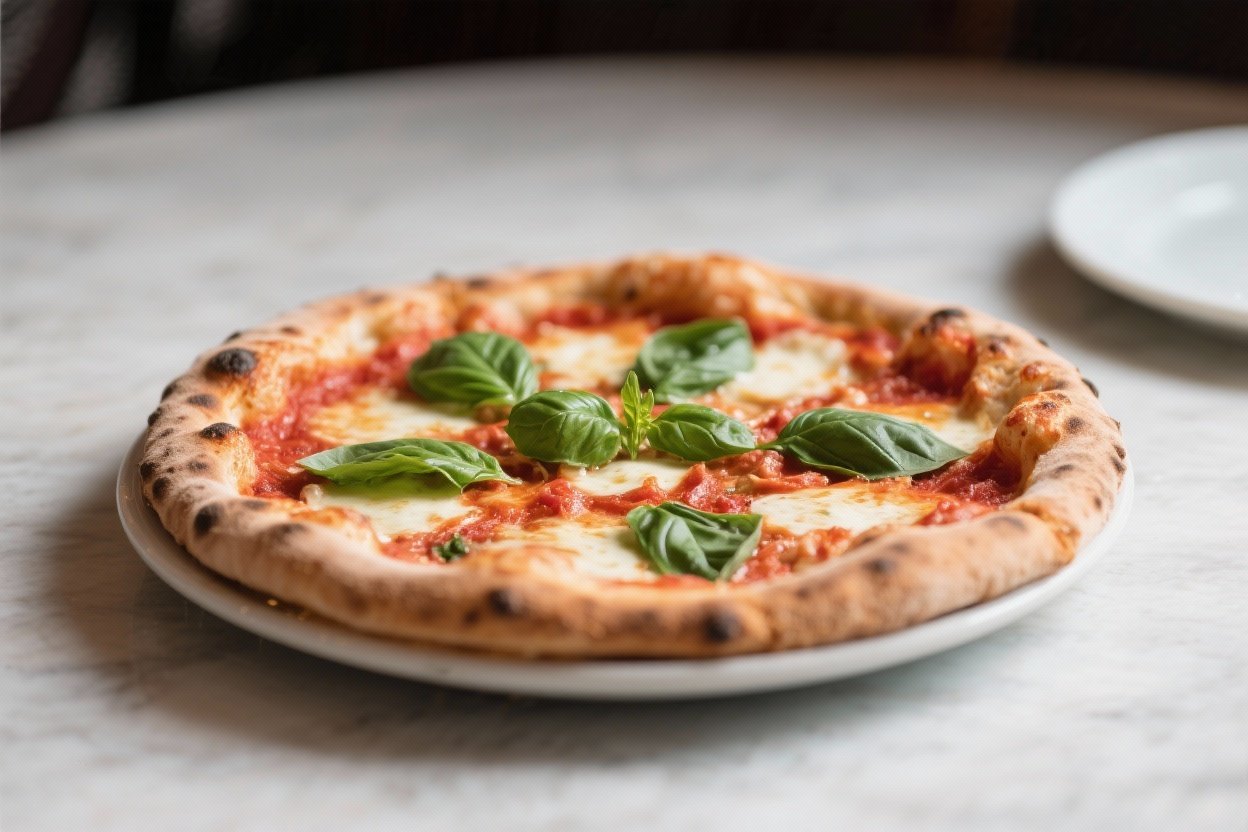
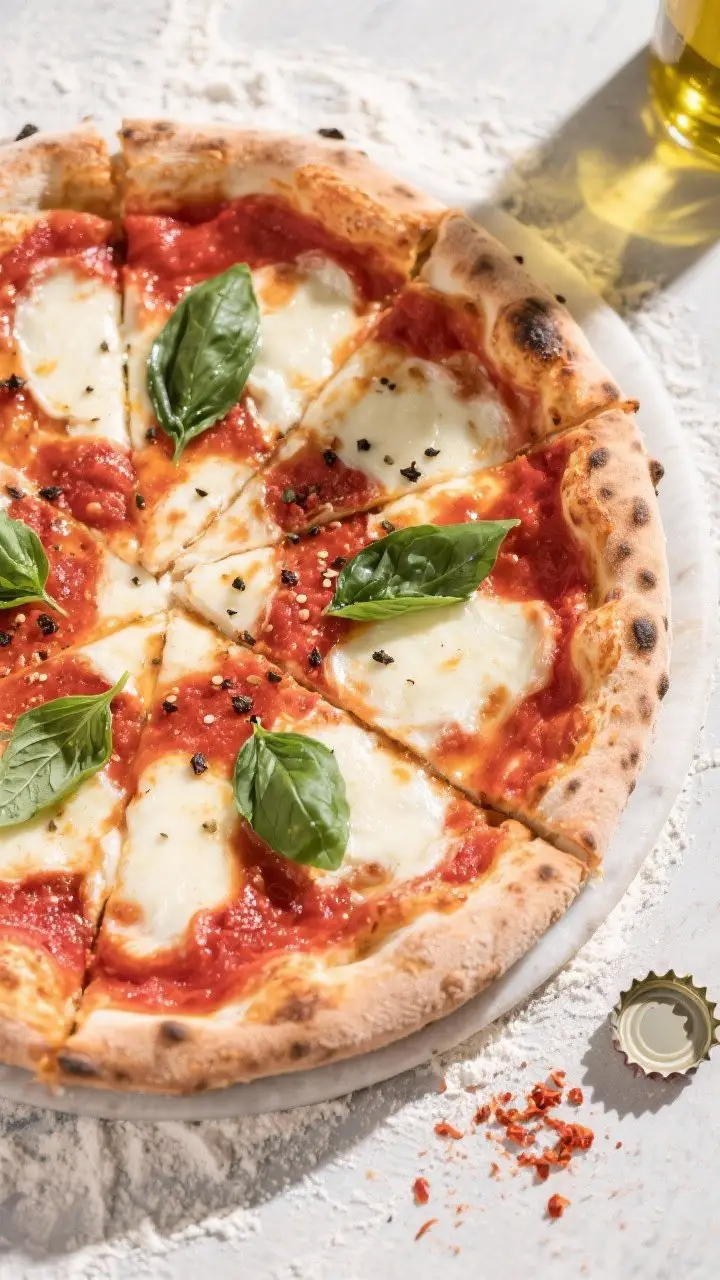
Margherita Neapolitan Pizza with Fresh Basil – A Simple, Classic Favorite
This is the pizza that proves less is more. A crisp-yet-chewy crust, vibrant tomato sauce, creamy mozzarella, and fragrant basil—every bite feels honest and satisfying. It’s the kind of recipe you make when you want something special without fuss.
With a hot oven and a few good ingredients, you’ll get restaurant-quality results at home. Whether it’s a weeknight dinner or a weekend treat, this Margherita Neapolitan pizza delivers big flavor with minimal effort.

Margherita Neapolitan Pizza with Fresh Basil - A Simple, Classic Favorite
Ingredients
- For the dough (makes 2 medium pizzas): 3 1/4 cups (400 g) bread flour or “00” pizza flour
- 1 1/4 cups (300 ml) room-temperature water
- 1 1/2 teaspoons fine sea salt
- 1/2 teaspoon instant yeast (or 3/4 teaspoon active dry yeast)
- 1 teaspoon extra-virgin olive oil (optional, for tenderness)
- For the sauce: 1 can (14–15 oz) whole peeled San Marzano tomatoes, drained
- 1 small garlic clove, grated or minced (optional)
- 1–2 tablespoons extra-virgin olive oil
- 1/2 teaspoon fine sea salt, plus more to taste
- For topping: 8–10 oz fresh mozzarella (fior di latte), sliced and patted dry
- Fresh basil leaves (a generous handful)
- Extra-virgin olive oil, for drizzling
- To finish (optional): Freshly ground black pepper
- Pinch of red pepper flakes
Instructions
- Mix the dough. In a large bowl, whisk flour, yeast, and salt.Add water and olive oil (if using). Stir with a spoon until no dry spots remain. The dough will be shaggy—this is fine.
- Knead briefly. Turn the dough onto a lightly floured surface and knead for 2–3 minutes until it smooths out slightly.You can also use stretch-and-folds in the bowl every 15 minutes over an hour instead of traditional kneading.
- First rise. Place the dough in a lightly oiled bowl, cover, and let it rise at room temperature until doubled, about 1–2 hours depending on your kitchen’s warmth.
- Divide and ball. Turn the dough out, divide into two equal pieces, and form tight balls by tucking the edges under. Place on a floured tray, cover, and rest 30–60 minutes. For extra flavor, refrigerate the dough for 12–24 hours, then bring to room temperature before shaping.
- Preheat your oven properly. Set a pizza stone or steel on the top rack.Preheat to the highest setting (500–550°F/260–290°C) for at least 45 minutes. The hot surface is crucial for that Neapolitan-style bottom char.
- Make the sauce. Crush the drained tomatoes by hand or pulse in a blender until just smooth. Stir in olive oil, salt, and garlic if using.Taste and adjust salt. Keep it uncooked for a bright, clean flavor.
- Prep the mozzarella. Slice or tear into small pieces. Pat dry with paper towels to avoid excess moisture on the pizza.
- Shape the dough. Dust your work surface and hands with flour.Press the dough ball gently from the center outward, leaving a thicker rim. Lift and stretch over your knuckles, turning as you go, until it’s about 10–12 inches wide. Avoid using a rolling pin—it can press out the air.
- Top lightly. Place the dough on a floured peel or upside-down sheet pan.Spread a thin layer of sauce, leaving a 1-inch border. Add mozzarella evenly. Don’t overload; this style is about restraint.
- Bake. Slide onto the hot stone or steel.Bake 6–8 minutes, or until the crust is puffed with charred spots and the cheese is bubbling. If your broiler is safe to use with your oven, finish under the broiler for 30–60 seconds for extra blistering.
- Finish with basil and oil. As soon as the pizza comes out, scatter fresh basil leaves. Drizzle with a little olive oil.Add pepper or red pepper flakes if you like.
- Repeat with the second dough ball. Let the oven reheat for a minute before baking the next pizza for best results.
Why This Recipe Works
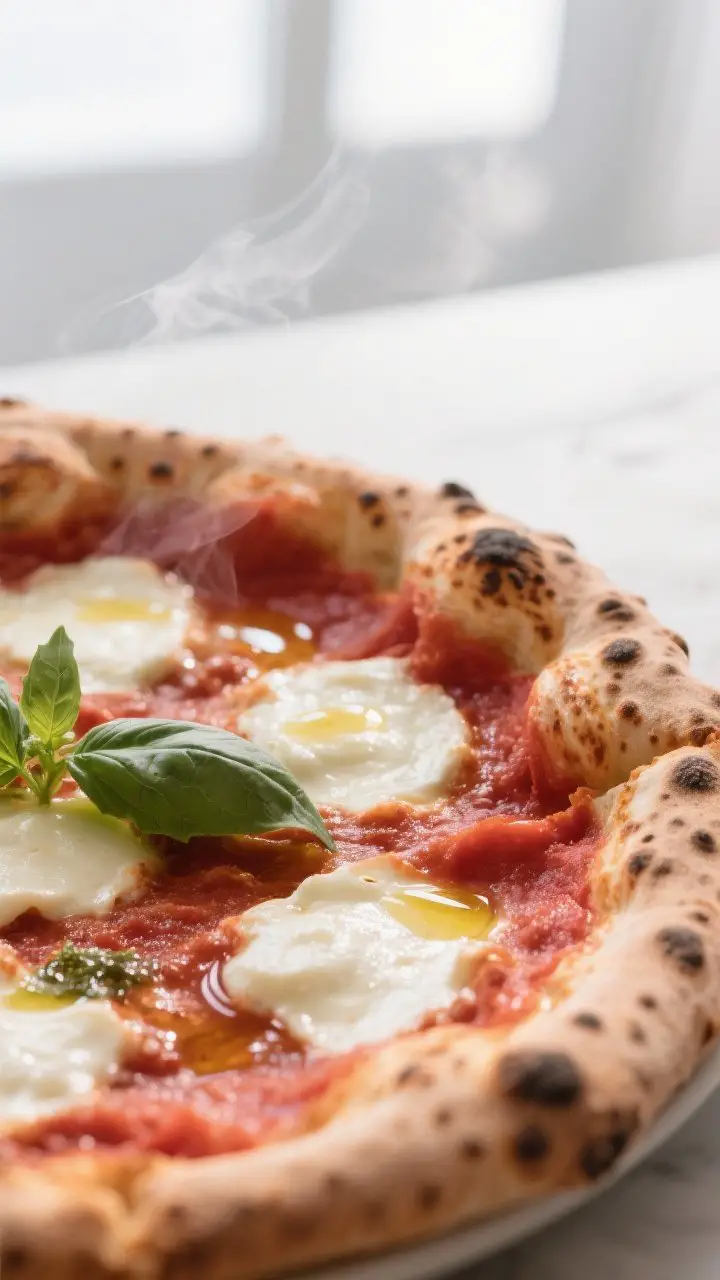
The beauty of a Margherita pizza lies in balance. High-hydration dough and strong flour create light, airy edges with a tender chew, while a quick-cooked sauce keeps things bright and fresh. Whole milk mozzarella melts into creamy puddles without flooding the crust. Fresh basil added after baking keeps the herb’s aroma alive instead of tasting cooked and dull. And a very hot oven or pizza stone/steel gives you that signature Neapolitan blister and char at home.
Ingredients
- For the dough (makes 2 medium pizzas):
- 3 1/4 cups (400 g) bread flour or “00” pizza flour
- 1 1/4 cups (300 ml) room-temperature water
- 1 1/2 teaspoons fine sea salt
- 1/2 teaspoon instant yeast (or 3/4 teaspoon active dry yeast)
- 1 teaspoon extra-virgin olive oil (optional, for tenderness)
- For the sauce:
- 1 can (14–15 oz) whole peeled San Marzano tomatoes, drained
- 1 small garlic clove, grated or minced (optional)
- 1–2 tablespoons extra-virgin olive oil
- 1/2 teaspoon fine sea salt, plus more to taste
- For topping:
- 8–10 oz fresh mozzarella (fior di latte), sliced and patted dry
- Fresh basil leaves (a generous handful)
- Extra-virgin olive oil, for drizzling
- To finish (optional):
- Freshly ground black pepper
- Pinch of red pepper flakes
Step-by-Step Instructions
- Mix the dough. In a large bowl, whisk flour, yeast, and salt.
Add water and olive oil (if using). Stir with a spoon until no dry spots remain. The dough will be shaggy—this is fine.
- Knead briefly. Turn the dough onto a lightly floured surface and knead for 2–3 minutes until it smooths out slightly.
You can also use stretch-and-folds in the bowl every 15 minutes over an hour instead of traditional kneading.
- First rise. Place the dough in a lightly oiled bowl, cover, and let it rise at room temperature until doubled, about 1–2 hours depending on your kitchen’s warmth.
- Divide and ball. Turn the dough out, divide into two equal pieces, and form tight balls by tucking the edges under. Place on a floured tray, cover, and rest 30–60 minutes. For extra flavor, refrigerate the dough for 12–24 hours, then bring to room temperature before shaping.
- Preheat your oven properly. Set a pizza stone or steel on the top rack.
Preheat to the highest setting (500–550°F/260–290°C) for at least 45 minutes. The hot surface is crucial for that Neapolitan-style bottom char.
- Make the sauce. Crush the drained tomatoes by hand or pulse in a blender until just smooth. Stir in olive oil, salt, and garlic if using.
Taste and adjust salt. Keep it uncooked for a bright, clean flavor.
- Prep the mozzarella. Slice or tear into small pieces. Pat dry with paper towels to avoid excess moisture on the pizza.
- Shape the dough. Dust your work surface and hands with flour.
Press the dough ball gently from the center outward, leaving a thicker rim. Lift and stretch over your knuckles, turning as you go, until it’s about 10–12 inches wide. Avoid using a rolling pin—it can press out the air.
- Top lightly. Place the dough on a floured peel or upside-down sheet pan.
Spread a thin layer of sauce, leaving a 1-inch border. Add mozzarella evenly. Don’t overload; this style is about restraint.
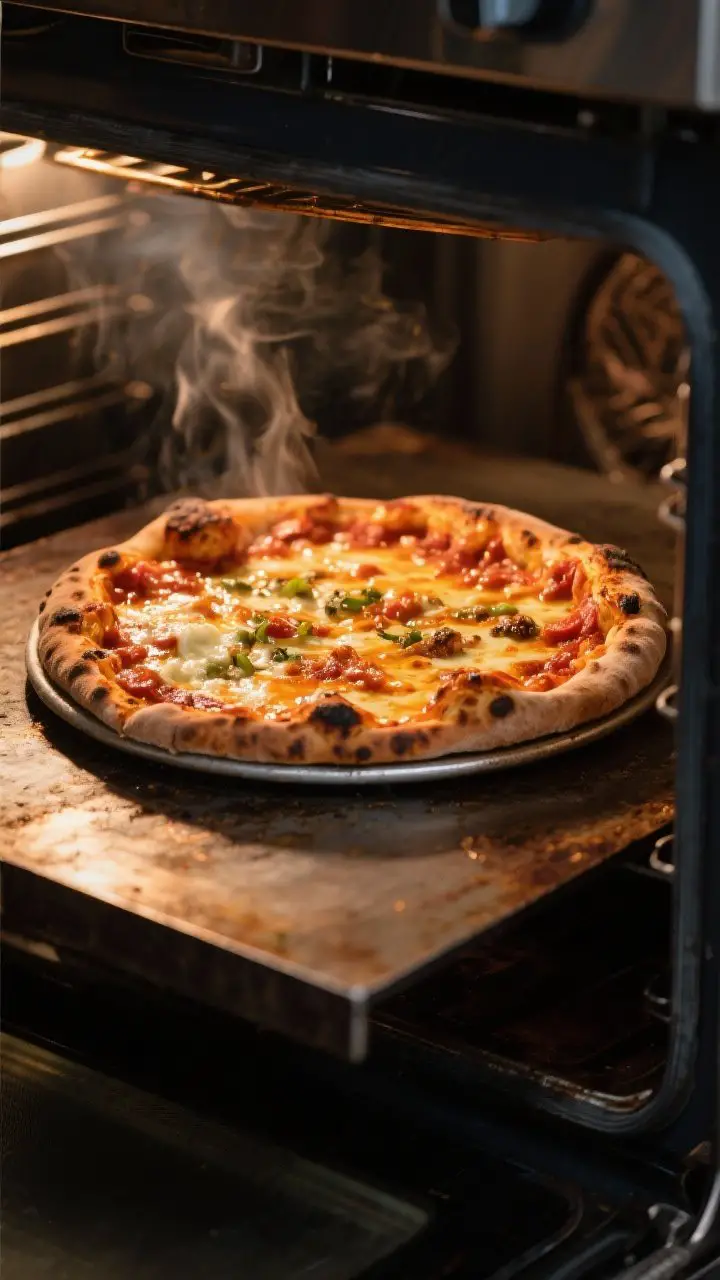
- Bake. Slide onto the hot stone or steel.
Bake 6–8 minutes, or until the crust is puffed with charred spots and the cheese is bubbling. If your broiler is safe to use with your oven, finish under the broiler for 30–60 seconds for extra blistering.
- Finish with basil and oil. As soon as the pizza comes out, scatter fresh basil leaves. Drizzle with a little olive oil.
Add pepper or red pepper flakes if you like.
- Repeat with the second dough ball. Let the oven reheat for a minute before baking the next pizza for best results.
How to Store
- Leftover slices: Cool completely, then store in an airtight container in the fridge for up to 3 days.
- Reheat: Use a hot skillet over medium heat 3–4 minutes, then cover for 1 minute to melt cheese. Or bake at 400°F (200°C) for 8–10 minutes. Avoid the microwave if you want a crisp crust.
- Dough: After the first rise and balling, wrap each dough ball lightly in oiled plastic and refrigerate up to 24 hours or freeze up to 2 months.
Thaw overnight in the fridge, then bring to room temperature before shaping.
Benefits of This Recipe
- Short ingredient list, big payoff: With just flour, tomatoes, mozzarella, basil, and oil, you get bold, clean flavor.
- Faster than takeout: Once your dough is ready, each pizza bakes in under 10 minutes.
- Customizable crust: Works with same-day dough or slow-fermented dough for deeper flavor.
- Lighter, fresher feel: No heavy toppings, just balanced richness and acidity.
- Skill-building: Teaches shaping, heat management, and minimalism—core pizza skills.
What Not to Do
- Don’t overload the toppings. Extra sauce or cheese leads to soggy centers.
- Don’t skip the high heat. A lukewarm oven won’t give you the blistered, airy crust.
- Don’t cook the basil on the pizza. It will blacken and taste bitter; add it right after baking.
- Don’t roll the dough. Rolling pins crush the gas pockets you worked to create.
- Don’t forget to dry the mozzarella. Moisture control is key to a crisp base.
Recipe Variations
- Buffalo Mozzarella: Use mozzarella di bufala for extra richness. Drain and pat very dry before topping.
- Garlic-Oil Base: Skip the tomato and brush the dough with olive oil, a pinch of salt, and a thin layer of garlic—then add cheese and basil.
- Cherry Tomato Burst: Halve a handful of cherry tomatoes and scatter a few on top for pops of sweetness.
- Herb Upgrade: Add a few small oregano leaves or a pinch of dried oregano along with the basil after baking.
- Spicy Finish: Drizzle with chili oil or sprinkle red pepper flakes at the table.
FAQ
Can I make this without a pizza stone or steel?
Yes. Use an inverted baking sheet preheated in the oven.
It won’t get quite as blistered, but it will still be crisp and tasty. Keep your oven at its highest setting and work quickly when sliding the pizza on and off.
What flour works best?
“00” pizza flour gives a soft, tender bite and excellent browning at high heat. Bread flour is a great substitute and easier to find.
Avoid all-purpose if you can—it works, but the chew and structure are better with higher-protein flours.
How wet should the dough be?
A slightly tacky dough with around 70–75% hydration is ideal for a puffy rim and open crumb. If you’re new to high hydration, start at the lower end and dust lightly with flour as you shape. The dough should be soft but manageable.
Can I use pre-shredded mozzarella?
You can, but it contains anti-caking agents that affect melting.
Fresh mozzarella (fior di latte) or a good block of whole milk mozzarella sliced by hand will melt better and taste cleaner. Just dry it well before topping.
Why is my pizza soggy in the center?
Common causes are too much sauce or cheese, watery mozzarella, or a cool baking surface. Use a light hand with toppings, pat cheese dry, and fully preheat your stone or steel.
Also, avoid letting the topped pizza sit too long before baking.
When should I add the basil?
Add basil immediately after baking. The residual heat wilts it gently and releases its aroma without turning it bitter or burnt.
Can I cold-ferment the dough?
Absolutely. After balling, refrigerate the dough 12–24 hours.
This slow rise builds flavor and makes the dough easier to stretch. Bring it to room temperature for 60–90 minutes before shaping.
How do I get those leopard spots on the crust?
Use very high heat, a well-preheated stone or steel, and avoid overworking the dough. A slightly wetter dough and quick bake promote blistering.
If safe for your oven, a brief broil at the end helps.
In Conclusion
Margherita Neapolitan pizza is proof that simple ingredients can deliver big results. With a hot oven, a gentle hand, and fresh basil added at the right moment, you’ll get a pie that’s balanced, fragrant, and deeply satisfying. Keep the toppings light, focus on the dough, and let the quality of your tomatoes and cheese shine.
Once you taste how good this can be at home, it might become your new go-to pizza night ritual.