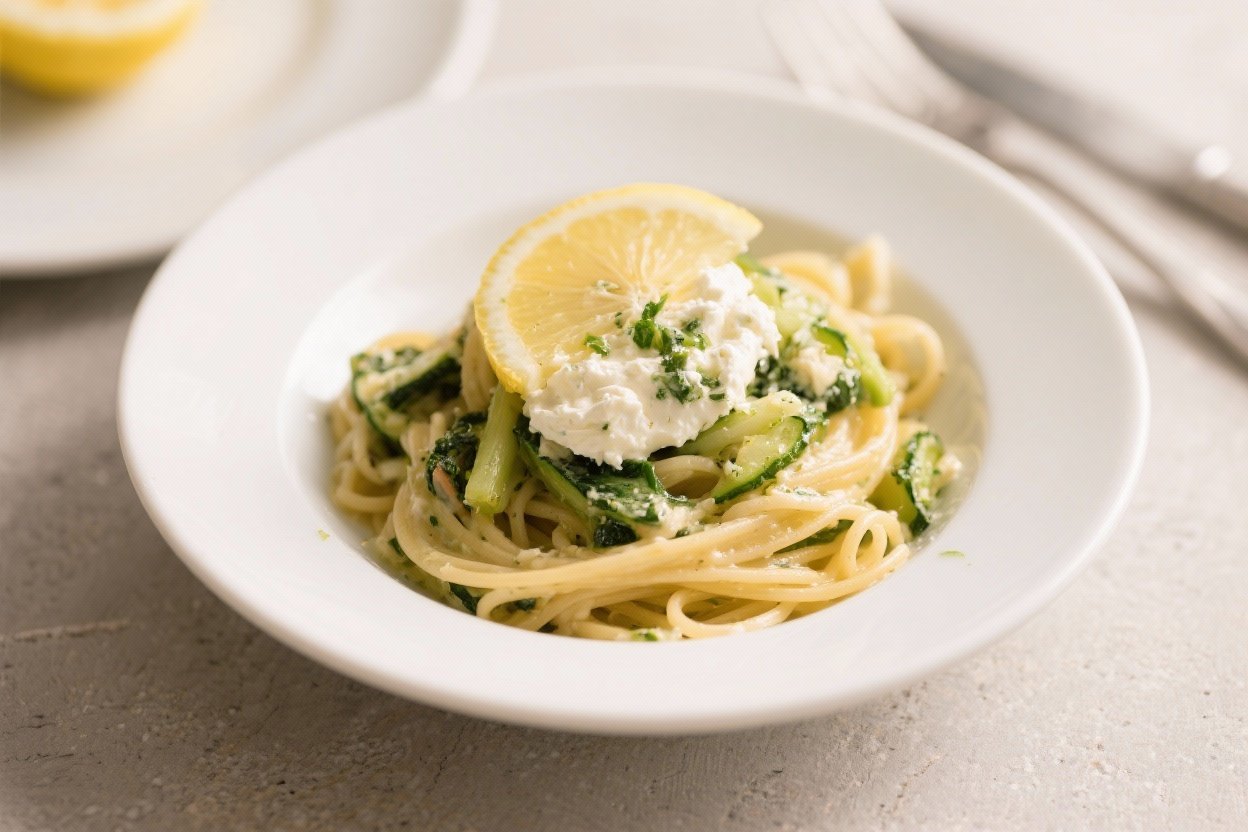
Vegetarian Lemon Ricotta Pasta – Bright, Creamy, and Weeknight-Friendly
This is the kind of pasta you make when you want something comforting but not heavy. The lemon keeps things bright, the ricotta makes it silky, and the whole dish comes together in the time it takes to boil pasta. It’s unfussy, simple, and satisfying in a way that feels fresh.
You can keep it classic or add vegetables and herbs to make it your own. Either way, it’s a go-to weeknight favorite that tastes restaurant-worthy with minimal effort.
Vegetarian Lemon Ricotta Pasta - Bright, Creamy, and Weeknight-Friendly
Ingredients
- 12 ounces pasta (spaghetti, linguine, or short pasta like rigatoni or orecchiette)
- 1 cup whole-milk ricotta cheese
- 1/3 cup freshly grated Parmesan or Pecorino Romano, plus more for serving
- Zest of 1 large lemon (about 2 teaspoons)
- 2–3 tablespoons fresh lemon juice (to taste)
- 1 large garlic clove, minced or grated
- 3 tablespoons extra-virgin olive oil
- 1/2 teaspoon fine sea salt, plus more for pasta water
- 1/4 teaspoon freshly ground black pepper
- 1/4–1/2 cup reserved pasta cooking water (as needed)
- Optional add-ins: 2 cups baby spinach, 1 cup peas, 1 cup blanched asparagus pieces, or 1/4 cup chopped fresh basil or parsley
- Optional garnish: red pepper flakes, lemon wedges, and extra lemon zest
Instructions
- Boil the pasta: Bring a large pot of well-salted water to a boil. Cook pasta until just shy of al dente, according to package directions.Reserve at least 1 cup of the pasta water before draining.
- Make the ricotta sauce base: In a large bowl, whisk together ricotta, Parmesan, lemon zest, lemon juice, garlic, olive oil, salt, and pepper. The mixture will be thick—that’s okay.
- Loosen with pasta water: Add 1/4 cup hot pasta water to the ricotta mixture and whisk until creamy and smooth. Add more water a splash at a time if needed.You want a silky, pourable sauce.
- Add the pasta: Toss the hot, drained pasta directly into the bowl with the sauce. The heat from the pasta will warm the ricotta gently and help it coat every strand.
- Fold in veggies (optional): If using spinach, peas, or asparagus, add them now. The residual heat will wilt tender greens and warm vegetables through.Add more pasta water if the sauce tightens.
- Taste and adjust: Add another squeeze of lemon for brightness, a pinch of salt, or a crack of pepper as needed. Finish with extra Parmesan.
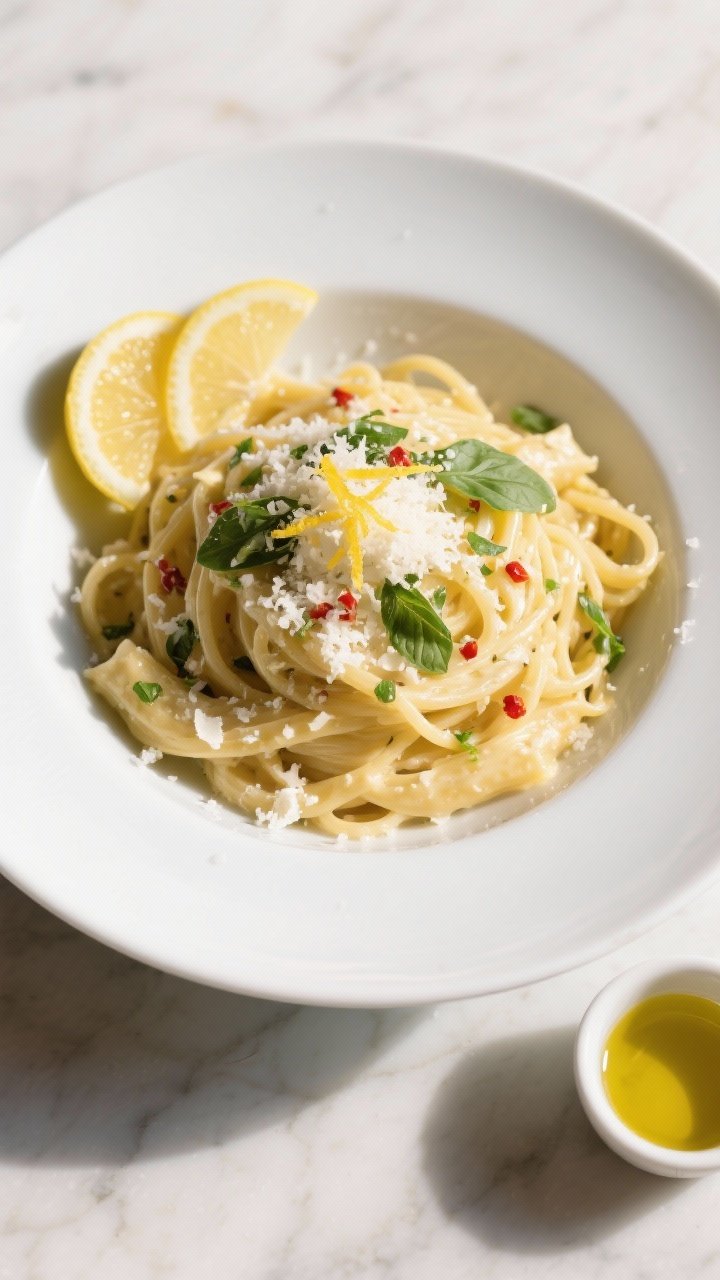
- Serve: Plate immediately. Garnish with chopped herbs, a pinch of red pepper flakes, and a little extra lemon zest if you like.
What Makes This Recipe So Good
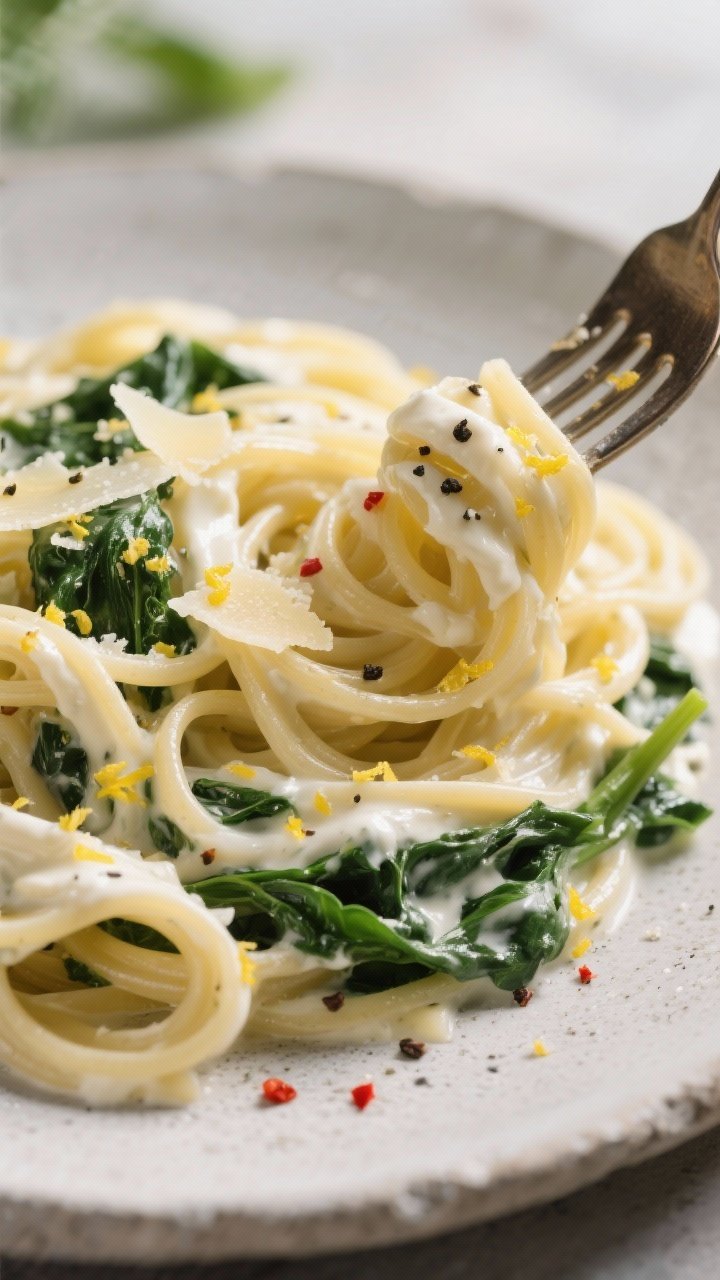
- Fast and easy: You’ll have dinner on the table in about 20 minutes. The sauce doesn’t need cooking—just mixing.
- Light yet creamy: Ricotta creates a soft, velvety sauce without heavy cream.
Lemon adds a clean, zesty finish.
- Flexible: Works with spaghetti, rigatoni, or any short pasta. Toss in peas, spinach, or asparagus for extra color and nutrition.
- Budget-friendly: Mostly pantry and fridge staples—pasta, lemon, ricotta, olive oil, and Parmesan.
- Comfort meets freshness: It’s cozy like Alfredo, but much brighter and lighter on the palate.
Ingredients
- 12 ounces pasta (spaghetti, linguine, or short pasta like rigatoni or orecchiette)
- 1 cup whole-milk ricotta cheese
- 1/3 cup freshly grated Parmesan or Pecorino Romano, plus more for serving
- Zest of 1 large lemon (about 2 teaspoons)
- 2–3 tablespoons fresh lemon juice (to taste)
- 1 large garlic clove, minced or grated
- 3 tablespoons extra-virgin olive oil
- 1/2 teaspoon fine sea salt, plus more for pasta water
- 1/4 teaspoon freshly ground black pepper
- 1/4–1/2 cup reserved pasta cooking water (as needed)
- Optional add-ins: 2 cups baby spinach, 1 cup peas, 1 cup blanched asparagus pieces, or 1/4 cup chopped fresh basil or parsley
- Optional garnish: red pepper flakes, lemon wedges, and extra lemon zest
Step-by-Step Instructions
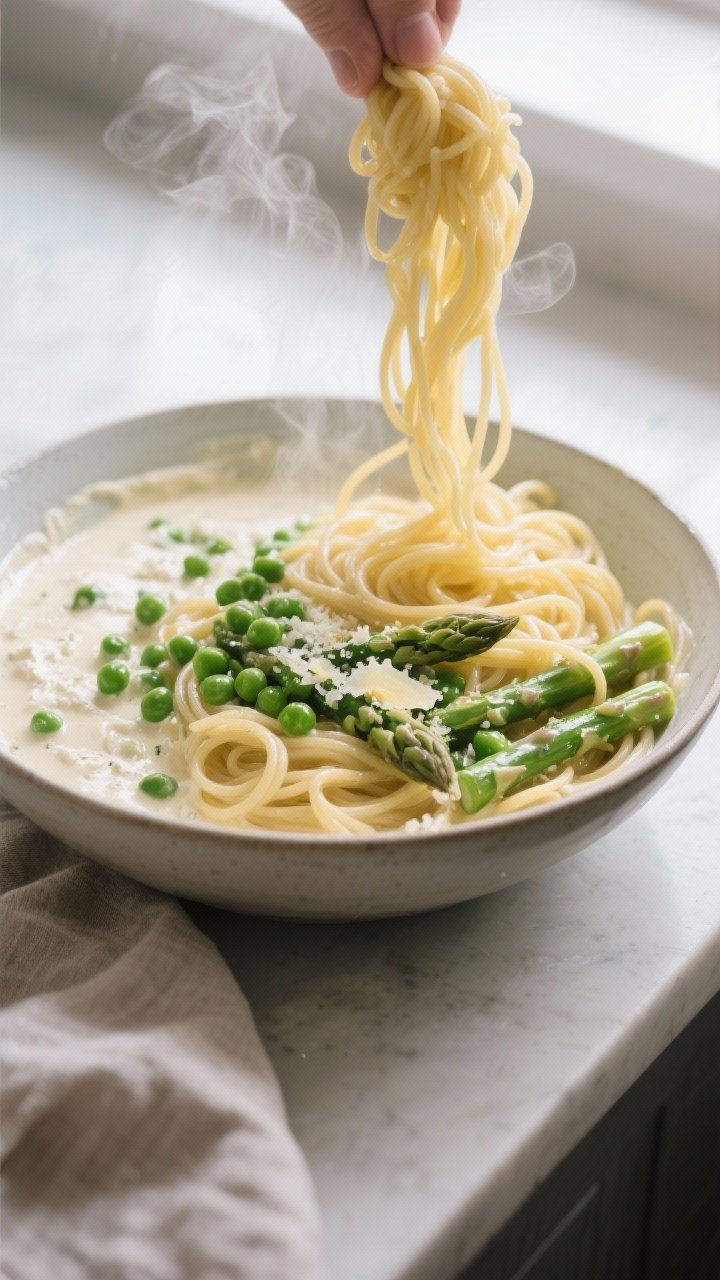
- Boil the pasta: Bring a large pot of well-salted water to a boil. Cook pasta until just shy of al dente, according to package directions.
Reserve at least 1 cup of the pasta water before draining.
- Make the ricotta sauce base: In a large bowl, whisk together ricotta, Parmesan, lemon zest, lemon juice, garlic, olive oil, salt, and pepper. The mixture will be thick—that’s okay.
- Loosen with pasta water: Add 1/4 cup hot pasta water to the ricotta mixture and whisk until creamy and smooth. Add more water a splash at a time if needed.
You want a silky, pourable sauce.
- Add the pasta: Toss the hot, drained pasta directly into the bowl with the sauce. The heat from the pasta will warm the ricotta gently and help it coat every strand.
- Fold in veggies (optional): If using spinach, peas, or asparagus, add them now. The residual heat will wilt tender greens and warm vegetables through.
Add more pasta water if the sauce tightens.
- Taste and adjust: Add another squeeze of lemon for brightness, a pinch of salt, or a crack of pepper as needed. Finish with extra Parmesan.
- Serve: Plate immediately. Garnish with chopped herbs, a pinch of red pepper flakes, and a little extra lemon zest if you like.
Keeping It Fresh
- Storage: Refrigerate leftovers in an airtight container for up to 3 days.
The sauce will thicken as it sits.
- Reheating: Warm gently over low heat on the stovetop with a splash of water, milk, or extra olive oil to loosen. Avoid high heat, which can make the ricotta grainy.
- Make-ahead tips: Whisk the ricotta sauce base up to 24 hours ahead and refrigerate. Bring it to room temperature while the pasta cooks, then thin with hot pasta water.
- Freshness boosters: Right before serving leftovers, add a squeeze of lemon and a handful of herbs to revive flavor.
Health Benefits
- Protein and calcium: Ricotta offers a good dose of protein and bone-supporting calcium, especially when using whole-milk ricotta.
- Heart-smart fats: Extra-virgin olive oil contributes monounsaturated fats, which support heart health.
- Vitamin C: Lemon juice and zest add vitamin C and brighten flavor without extra salt or heavy cream.
- Vegetable boost: Add spinach, peas, or asparagus for fiber, folate, and phytonutrients for a more balanced meal.
- Balanced energy: Pasta provides steady carbohydrates for energy; pairing with protein-rich ricotta helps keep you full longer.
Pitfalls to Watch Out For
- Skipping pasta water: The starchy water is key.
It binds and loosens the sauce. Without it, the sauce can feel thick and pasty.
- Overcooking the pasta: Go for al dente or just under. Overcooked noodles won’t hold the creamy sauce as well.
- Too much lemon: Lemon should lift, not overpower.
Start with 2 tablespoons juice and add more to taste.
- High heat on ricotta: Avoid cooking the sauce in a pan over high heat. It can split and become grainy. Mix off the heat with hot pasta and water.
- Underseasoning: Salt your pasta water well and taste the sauce.
A pinch of salt and a grating of cheese can make the flavors pop.
Variations You Can Try
- Green goodness: Stir in baby spinach, blanched asparagus tips, or thawed peas. Add lots of chopped parsley or basil.
- Lemony herb bomb: Add fresh mint and dill with extra lemon zest for a Mediterranean feel.
- Roasted veg twist: Toss with roasted cherry tomatoes, zucchini, or broccoli for sweet, caramelized notes.
- Nutty crunch: Finish with toasted pine nuts or chopped walnuts for texture.
- Heat lovers: Add red pepper flakes or a drizzle of chili oil for a gentle kick.
- Gluten-free: Use your favorite gluten-free pasta and save some of the cooking water as usual.
- Extra creamy: Mix in a couple tablespoons of mascarpone or a splash of milk if you want a looser, richer sauce.
FAQ
Can I use low-fat ricotta?
Yes, but the sauce will be less creamy and may taste slightly chalky. If using low-fat, add a teaspoon of olive oil or a spoonful of mascarpone to round it out.
What pasta shape works best?
Spaghetti and linguine are classic, but short shapes like rigatoni, fusilli, or orecchiette hold the sauce beautifully.
Use what you love and what you have.
Do I need to cook the ricotta sauce?
No. The hot pasta and starchy water warm and emulsify the sauce. Cooking ricotta over high heat can make it grainy.
How do I make it more lemony without making it sour?
Add more lemon zest instead of juice.
Zest gives bright lemon aroma without adding extra acidity.
Can I make this without Parmesan?
Yes. Try Pecorino Romano for a sharper flavor, or skip the hard cheese and season with extra salt, pepper, and herbs. Nutritional yeast can add a savory note, too.
What can I use instead of garlic?
Use a pinch of garlic powder for a softer flavor, or finely grate a small shallot.
You can also omit it and lean on lemon and herbs.
How can I add more protein while keeping it vegetarian?
Stir in white beans or chickpeas, or top with toasted pine nuts. A dollop of pesto adds flavor and a bit of protein from nuts and cheese.
In Conclusion
Vegetarian Lemon Ricotta Pasta is proof that simple ingredients can deliver big flavor. It’s bright, creamy, and endlessly adaptable to what’s in your fridge.
With a handful of pantry staples and a lemon, you’ve got a satisfying meal in minutes. Keep this one in your weeknight rotation, and tweak it to suit your mood—extra herbs, a handful of greens, or a punch of heat. It never disappoints.