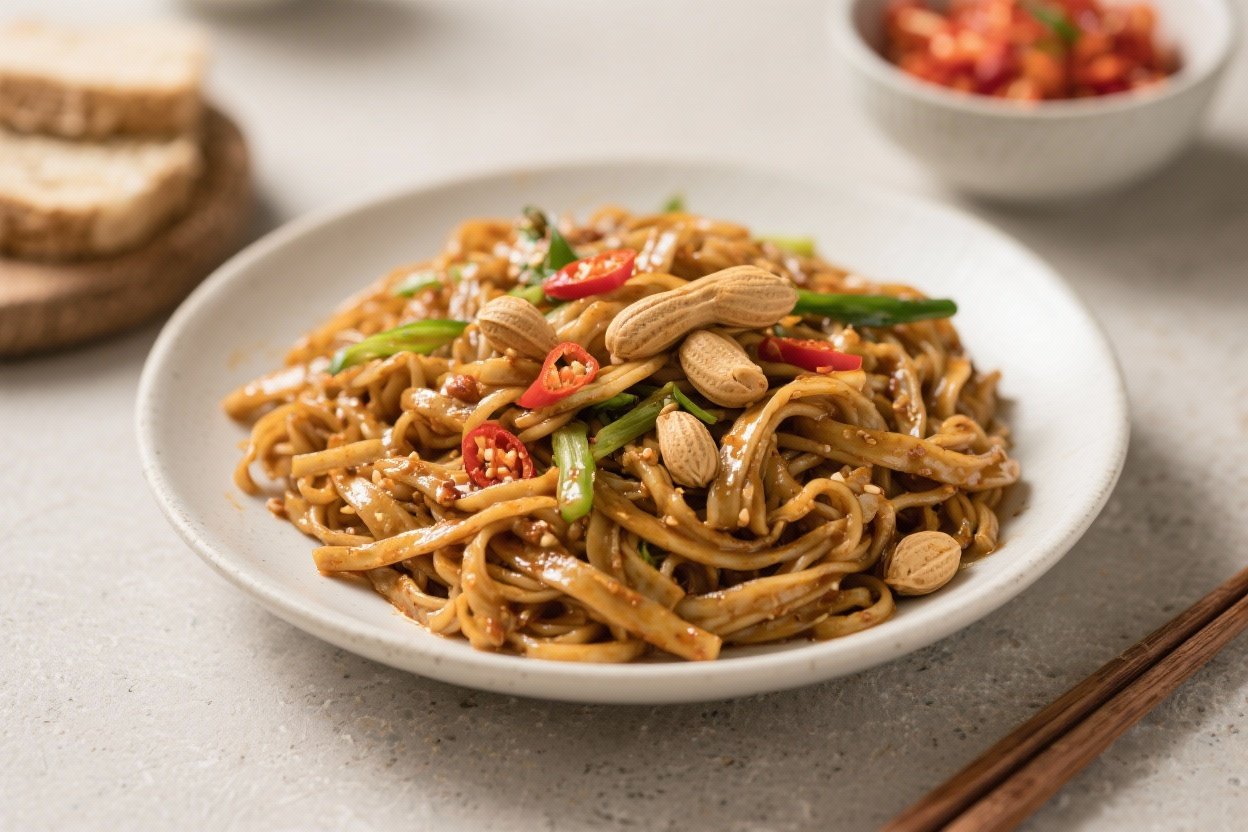
Spicy Vegan Peanut Noodle Dinner – Bold, Creamy, and Weeknight-Friendly
This is the kind of dinner you look forward to all day: slurpy noodles slicked with creamy peanut sauce, fresh crunchy veggies, and a kick of heat. It’s quick, deeply satisfying, and completely plant-based. The sauce comes together in minutes with pantry staples, and the whole meal cooks faster than takeout arrives.
Make it mild or fiery, packed with veggies or super simple—either way, it hits the spot.
Spicy Vegan Peanut Noodle Dinner - Bold, Creamy, and Weeknight-Friendly
Ingredients
- Noodles: 8–10 ounces of rice noodles, soba, spaghetti, or ramen (use gluten-free if needed).
- Veggies: 2 cups total, thinly sliced. Great options include bell pepper, carrots, snap peas, cabbage, cucumbers (for topping), or steamed broccoli.
- Aromatics: 2–3 cloves garlic (minced) and a 1-inch piece of fresh ginger (grated).
- Peanut butter: 1/3 to 1/2 cup, smooth or crunchy.Natural peanut butter works great.
- Soy sauce or tamari: 3–4 tablespoons for saltiness and depth.
- Rice vinegar or lime juice: 1–2 tablespoons for acidity.
- Maple syrup or brown sugar: 1–2 teaspoons for balance.
- Chili heat: 1–2 tablespoons chili crisp, sriracha, sambal oelek, or gochujang (adjust to taste).
- Sesame oil: 1–2 teaspoons for nuttiness.
- Neutral oil: 1 tablespoon (avocado, canola, or grapeseed) for sautéing aromatics.
- Water: 1/3–1/2 cup to thin the sauce to your preferred consistency.
- Optional protein: Baked or pan-fried tofu, tempeh, or edamame.
- Toppings: Chopped scallions, cilantro, toasted sesame seeds, crushed peanuts, lime wedges.
Instructions
- Cook the noodles: Boil according to package directions until just tender. Drain and rinse briefly under cool water to stop cooking and prevent sticking. Set aside.
- Prep your veggies: Thinly slice or julienne your chosen vegetables.Keep crunchy ones (like bell pepper and carrots) raw for contrast, or lightly steam broccoli and snap peas.
- Make the sauce base: In a small bowl, whisk together peanut butter, soy sauce or tamari, rice vinegar or lime, maple syrup or brown sugar, chili sauce, and sesame oil. Add 1/3 cup water to loosen. Adjust with more water until it’s pourable but still creamy.
- Sauté aromatics: Heat the neutral oil in a skillet over medium-low heat.Add garlic and ginger. Cook 30–60 seconds until fragrant, stirring constantly so they don’t brown.
- Combine sauce with aromatics: Pour the peanut sauce into the skillet with the garlic and ginger. Stir and let it gently warm for 1–2 minutes.If it thickens too much, add a splash of water.
- Add noodles: Toss in the cooked noodles and stir until evenly coated. If using tofu or edamame, fold them in now to warm through.
- Finish with veggies: Off the heat, add the fresh veggies and toss to combine. Keep some for topping if you like a mix of textures.
- Taste and tweak: Add more soy for salt, lime for brightness, chili for heat, or a pinch of sugar for balance.
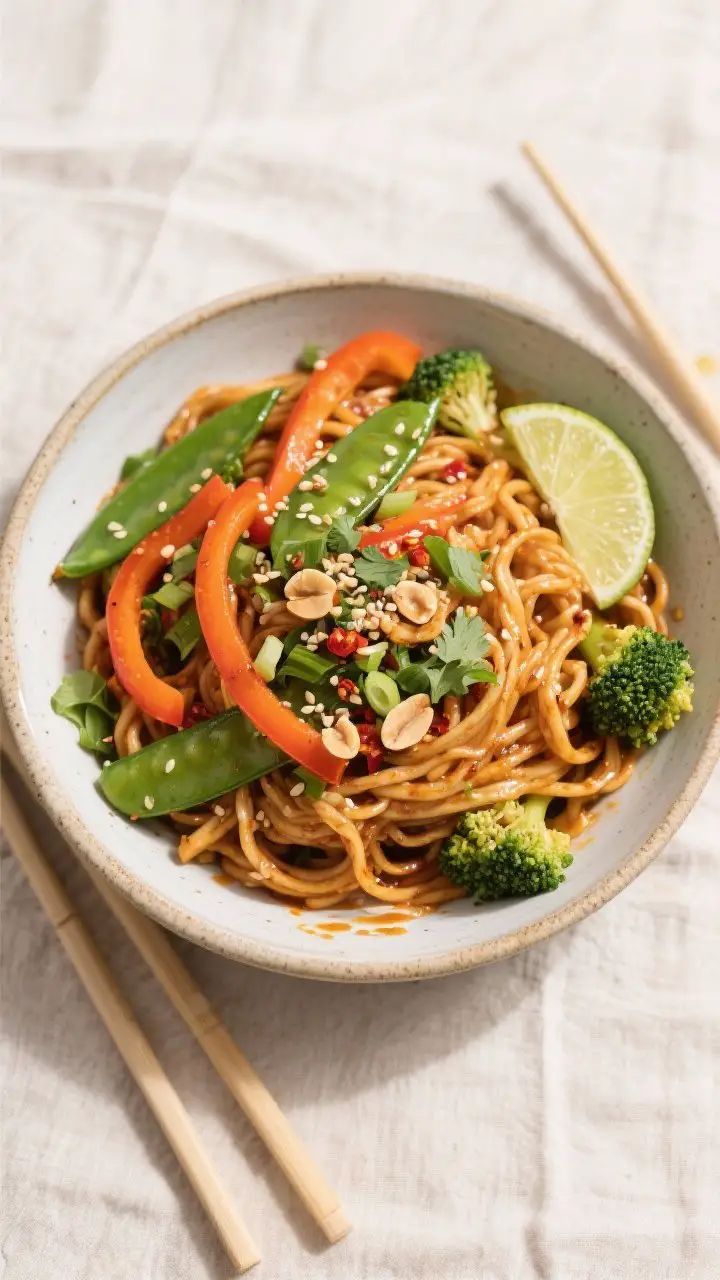
- Serve: Top with scallions, cilantro, sesame seeds, and crushed peanuts.Squeeze over lime and serve warm or at room temp.
What Makes This Recipe So Good
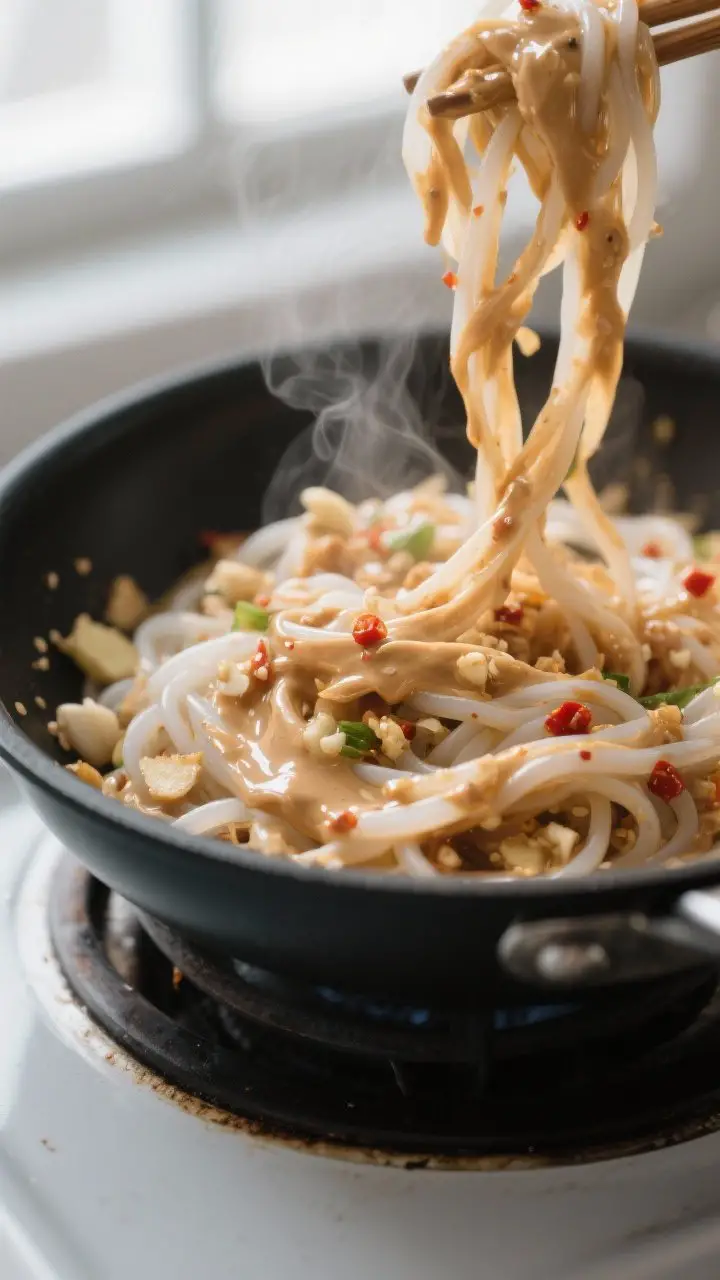
- Big flavor, little effort: A few ingredients make a sauce that’s savory, nutty, tangy, and spicy in perfect balance.
- Flexible and forgiving: Use any noodles you like and whatever veggies you have on hand. It’s hard to mess up.
- Meal-prep friendly: The sauce keeps well, and the noodles reheat beautifully with a splash of water.
- Budget-conscious: Mostly pantry staples, inexpensive produce, and no fancy equipment required.
- Comforting but light: Rich peanut sauce coats the noodles, while crisp veggies add freshness and crunch.
What You’ll Need
- Noodles: 8–10 ounces of rice noodles, soba, spaghetti, or ramen (use gluten-free if needed).
- Veggies: 2 cups total, thinly sliced. Great options include bell pepper, carrots, snap peas, cabbage, cucumbers (for topping), or steamed broccoli.
- Aromatics: 2–3 cloves garlic (minced) and a 1-inch piece of fresh ginger (grated).
- Peanut butter: 1/3 to 1/2 cup, smooth or crunchy.
Natural peanut butter works great.
- Soy sauce or tamari: 3–4 tablespoons for saltiness and depth.
- Rice vinegar or lime juice: 1–2 tablespoons for acidity.
- Maple syrup or brown sugar: 1–2 teaspoons for balance.
- Chili heat: 1–2 tablespoons chili crisp, sriracha, sambal oelek, or gochujang (adjust to taste).
- Sesame oil: 1–2 teaspoons for nuttiness.
- Neutral oil: 1 tablespoon (avocado, canola, or grapeseed) for sautéing aromatics.
- Water: 1/3–1/2 cup to thin the sauce to your preferred consistency.
- Optional protein: Baked or pan-fried tofu, tempeh, or edamame.
- Toppings: Chopped scallions, cilantro, toasted sesame seeds, crushed peanuts, lime wedges.
How to Make It
- Cook the noodles: Boil according to package directions until just tender. Drain and rinse briefly under cool water to stop cooking and prevent sticking. Set aside.
- Prep your veggies: Thinly slice or julienne your chosen vegetables.
Keep crunchy ones (like bell pepper and carrots) raw for contrast, or lightly steam broccoli and snap peas.
- Make the sauce base: In a small bowl, whisk together peanut butter, soy sauce or tamari, rice vinegar or lime, maple syrup or brown sugar, chili sauce, and sesame oil. Add 1/3 cup water to loosen. Adjust with more water until it’s pourable but still creamy.
- Sauté aromatics: Heat the neutral oil in a skillet over medium-low heat.
Add garlic and ginger. Cook 30–60 seconds until fragrant, stirring constantly so they don’t brown.
- Combine sauce with aromatics: Pour the peanut sauce into the skillet with the garlic and ginger. Stir and let it gently warm for 1–2 minutes.
If it thickens too much, add a splash of water.
- Add noodles: Toss in the cooked noodles and stir until evenly coated. If using tofu or edamame, fold them in now to warm through.
- Finish with veggies: Off the heat, add the fresh veggies and toss to combine. Keep some for topping if you like a mix of textures.
- Taste and tweak: Add more soy for salt, lime for brightness, chili for heat, or a pinch of sugar for balance.
- Serve: Top with scallions, cilantro, sesame seeds, and crushed peanuts.
Squeeze over lime and serve warm or at room temp.
Keeping It Fresh
- Storage: Refrigerate leftovers in an airtight container for up to 4 days.
- Reheating: Warm gently on the stove or in the microwave with a splash of water to loosen the sauce. Stir halfway.
- Meal prep tip: Store sauce, noodles, and raw veggies separately. Mix just before eating for the best texture.
- Freezing: Freeze the sauce alone up to 3 months.
Thaw overnight and whisk before using.

Why This is Good for You
- Plant-powered protein: Peanut butter plus tofu or edamame delivers satisfying protein without heaviness.
- Healthy fats: Peanuts and sesame oil bring unsaturated fats that help keep you full and support nutrient absorption.
- Fiber and micronutrients: Crisp veggies add fiber, vitamin C, and a range of minerals that support energy and immunity.
- Steady energy: Carbs from noodles, fats from peanuts, and protein from legumes create a balanced, steady meal.
Common Mistakes to Avoid
- Overcooking noodles: Go for just-tender. Overcooked noodles turn mushy and soak up too much sauce.
- Skipping the water in the sauce: Peanut butter needs thinning. Without it, you’ll end up with a gluey texture.
- Burning garlic and ginger: Keep the heat low.
Bitter aromatics can overpower the dish.
- Under-seasoning: Taste at the end. You want a balance of salty, spicy, tangy, and just a hint of sweet.
- Adding too many watery veggies: Cucumbers and tomatoes can thin the sauce. Use them as a topping, not the base.
Recipe Variations
- Sesame-soba bowl: Use buckwheat soba and add steamed edamame, shredded cabbage, and extra sesame oil.
- Thai-inspired: Swap rice vinegar for lime, add a splash of coconut milk, and finish with lots of cilantro and crushed peanuts.
- Extra-veg: Stir-fry mushrooms, bok choy, and broccoli before tossing with the sauce for a heartier bowl.
- No-peanut version: Use almond butter or sunflower seed butter.
Adjust sweetness and salt to taste.
- Gluten-free: Choose rice noodles or gluten-free spaghetti and use tamari.
- Low-heat: Skip the chili and add a pinch of smoked paprika for depth without the burn.
FAQ
Can I make the sauce ahead of time?
Yes. Mix the sauce (without the aromatics) up to 5 days in advance and refrigerate. Whisk before using and warm gently with sautéed garlic and ginger to wake up the flavors.
What noodles work best?
Rice noodles and spaghetti coat nicely and stay springy.
Soba works too, but rinse it well to remove excess starch. Use what you have—just cook to al dente.
Is there a way to cut the sodium?
Use low-sodium soy sauce or tamari, add more lime juice for brightness, and thin with water instead of adding extra soy. Taste before salting anything else.
How can I make it higher in protein?
Add crispy tofu, tempeh, or a generous handful of shelled edamame.
You can also stir in hemp seeds at the end for a small protein boost.
What if my sauce turns too thick?
Whisk in warm water a tablespoon at a time until it loosens. Re-season with a splash of soy or lime if the flavor gets diluted.
Can I serve it cold?
Absolutely. It makes an excellent chilled noodle salad.
Toss with a little extra water or lime juice just before serving to keep it silky.
Wrapping Up
Spicy Vegan Peanut Noodle Dinner is the kind of recipe that never gets old. It’s fast, flexible, and full of flavor you can adjust to your mood. Keep the sauce ingredients on hand and you’re always about 20 minutes from a comforting, colorful meal.
Add crunch, add heat, and make it yours—then enjoy those happy, saucy noodles.